Paver installation in Ventura County, built from the base up
VC Turf does paver installation across Ventura County: driveways, patios, walkways, walls, flagstone, and the rock that finishes the beds. This is the paving contractor side of our work, and the walls under it are the masonry contractor side. Every job starts with a compacted base, because pavers stay only as flat as what is under them.
What interlocking pavers are, and why they are not a slab
An interlocking paver surface is hundreds of separate units set tight on a bed of sand over compacted rock. Nothing glues them down. An edge restraint holds the outside rows and sand in the joints locks the rest.
A poured slab is one piece. When the ground under it moves, it cracks, and the crack is there for good. Pavers move as units. If a root lifts a corner or a pipe has to go through, we lift those pavers, fix the base, and set the same ones back. The joints also let water through instead of sheeting it toward the garage.
Which paver service you need, and when
Most projects use two or three of these together: a driveway with a path to the door, or a patio with a wall behind it and artificial turf beside it. All six sit under our services, and one estimate covers the job.
Paver driveways
Deeper base and a tight pattern, because a car turning in place is the hardest load pavers carry.
Right when: the old concrete is cracked or lifting.See paver drivewaysPaver patios
The outdoor room. Foot traffic only, so every pattern and size is open.
Right when: the backyard is dirt, old slab, or unused lawn.See paver patiosWalkways
Front paths and side-yard runs. Narrow work with a lot of edge, so cuts and restraint matter most.
Right when: the path is sunk stones or cracked concrete.See walkwaysRetaining and planter walls
Segmental block, planter, and railroad tie walls, each with gravel and a drain behind it.
Right when: the yard has a grade change or a bank that washes out.See wallsHow a paver surface goes together
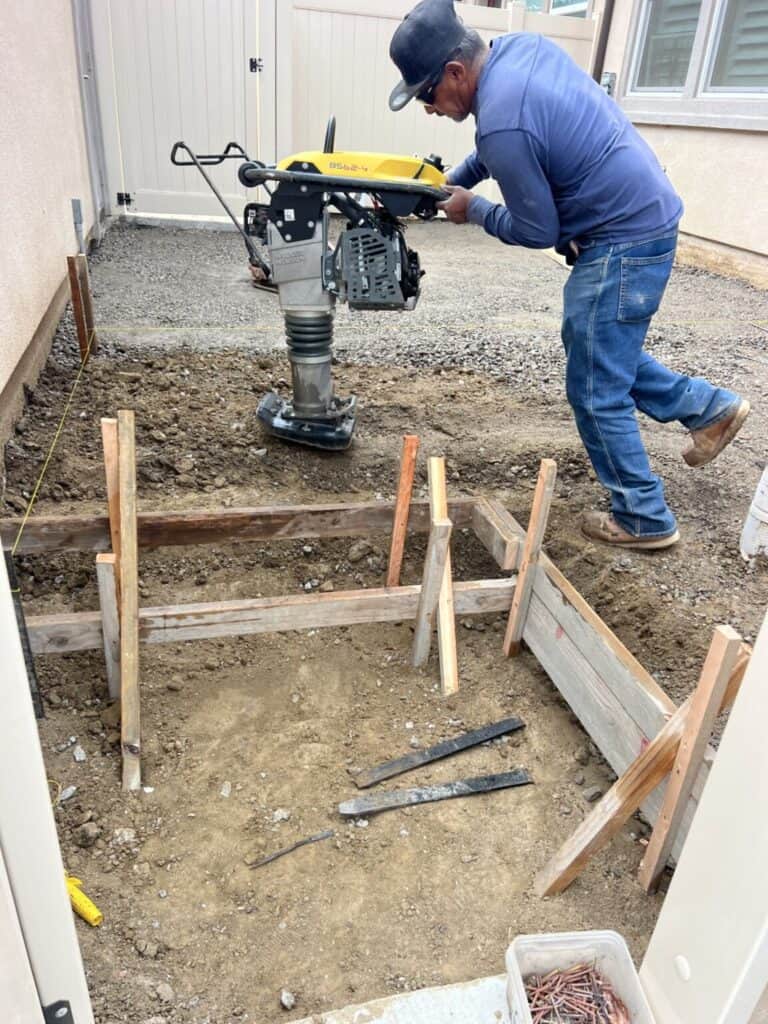
Every paver job follows the same order, because each layer protects the one above it. We dig to a depth that fits the load; a driveway goes deeper than a path. On soft or clay soil, geotextile fabric goes down first so the base rock does not sink into the dirt.
The base is crushed aggregate placed in lifts and plate-compacted after each one, because one thick layer never packs at the bottom. Over it goes a thin bed of coarse sand, screeded to the drainage slope. The pavers go on that bed in the chosen pattern.
Edge restraint is spiked along every open side so the rows cannot walk. Cuts fit the pattern to curves. The field is plate-compacted to seat each paver, then polymeric sand is swept into the joints and misted so it sets. That sand locks the units together and keeps weeds out.
Concrete pavers, natural stone, or permeable
Concrete pavers are the standard unit: uniform size, the widest color range, and the lowest cost per foot. Natural stone gives a surface that does not repeat, covered on our flagstone page. Permeable pavers use wider stone-filled joints so rain drains into the base, for lots with nowhere to send runoff.
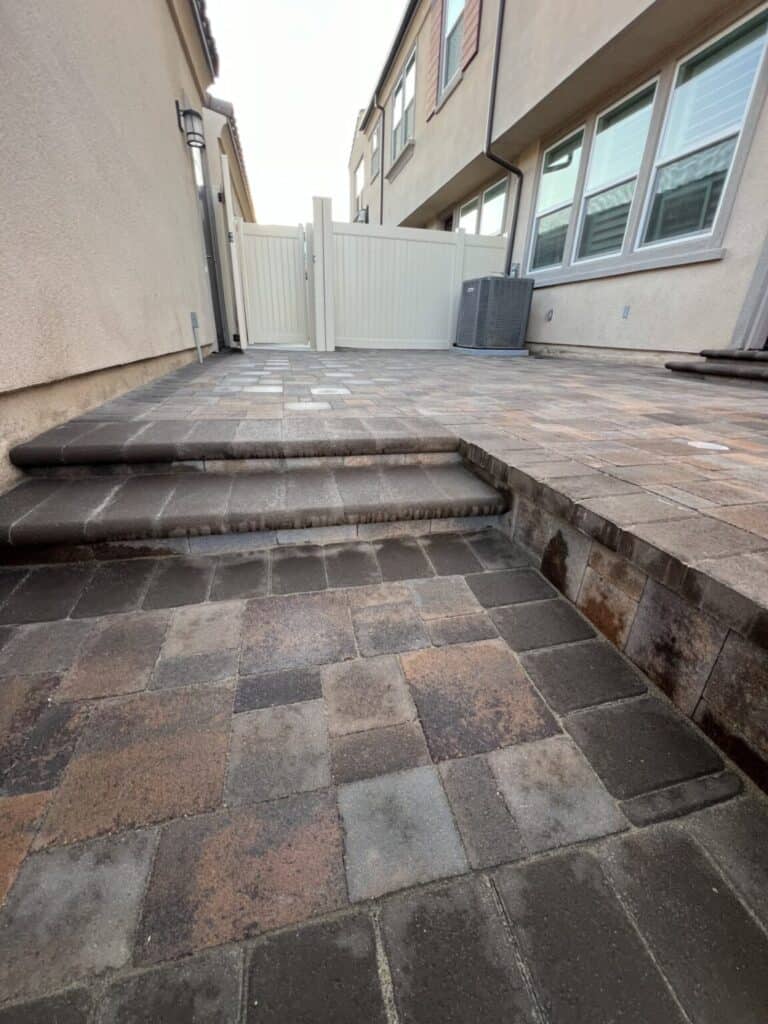
Pattern is a structural choice before it is a style choice. Herringbone is the driveway pattern because its angled joints spread the push of a turning tire. Running bond, basketweave, and random ashlar belong where only feet land.
Blends of two or three tones hide dust and tire marks better than one flat color. Lighter colors stay cooler under bare feet. A darker border hides the cut edges.
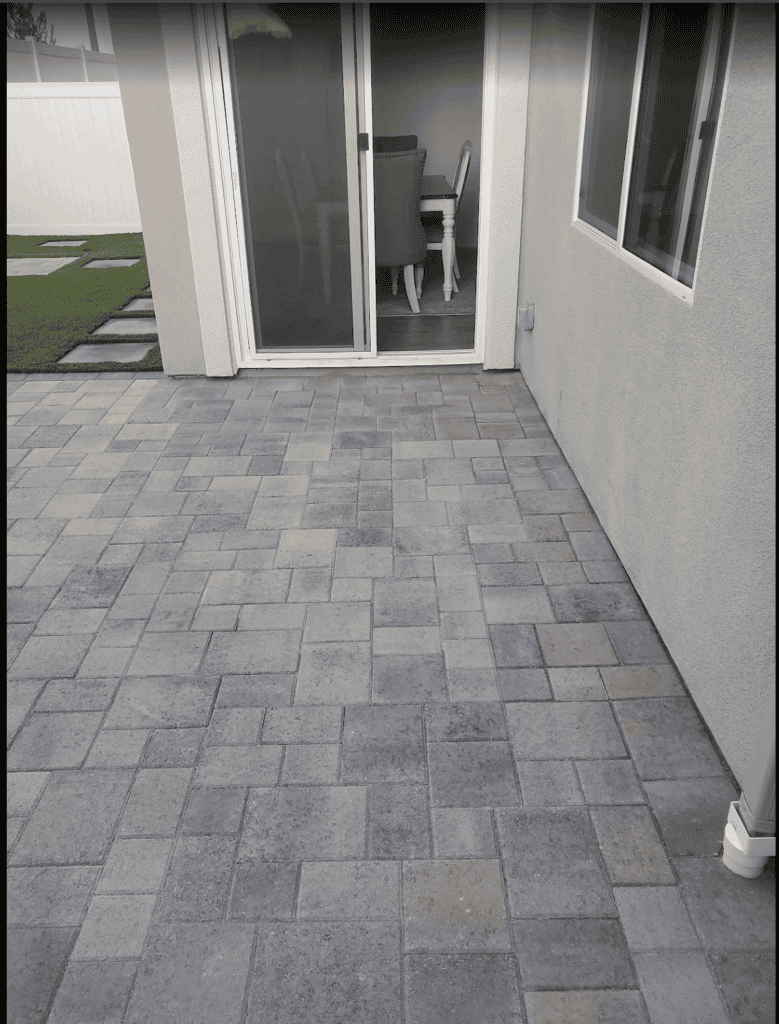 Blended color and a border course
Pavers or concrete? An honest answer
Poured concrete wins on price for a plain driveway or a big pad, and our concrete crew does that work too. Pavers win where the ground moves and where you may need to open the surface later. The full comparison: pavers vs concrete for a driveway.
What local ground does to a paver job
Winters here never freeze the ground, so nothing pries the joints open each year. The ground does bring clay, sand, big roots, and salt air.
Clay, sand, and roots
Inland clay swells when wet and shrinks when dry, so the base goes deeper with fabric under it. Sandy coastal soil drains well but needs the fabric too. Big roots near a driveway get cut back or bridged, and that section is the one we expect to reset one day.
Water and salt
Every surface slopes toward the street or a drain, never the house, and ties into drainage and grading when the lot needs it. Within a few blocks of the ocean, we specify restraint and spikes that will not rust through.
What decides the cost
Square footage, dig depth, whether old concrete has to come out, the paver you choose, the pattern and its cut count, the amount of edge, and access. A backyard reached through a side gate costs more per foot than a driveway off the curb.
Upkeep, and who does the work
Sweep it, rinse it, and pull the odd weed from a joint. Every few years, sweep in fresh polymeric sand where it has worn. Sealing is optional. VC Turf holds California contractor license CSLB #1036018. See finished paver work in the gallery.
What people ask before a paver installation
They can, if the base was thin or compacted in one thick layer. That is why we build it in lifts with fabric under it on soft soil. The spots to watch are next to big trees and along any edge without restraint.
Sometimes, on a patio or walkway that is sound and drains well, with thinner units on a sand bed. Not on a driveway, and not on a slab that is already cracked, because the pavers would follow it.
Joint sand mixed with a binder that hardens when wet down. It holds each paver against its neighbors and blocks the weeds and ants that get into plain sand. A top-up every few years is normal.
No. The estimate is based on area, depth, and the paver family. Pattern changes the cut count, so herringbone on a curved driveway costs more labor than running bond on a straight path, and the quote says so when it matters.
Ready to see what pavers would do for your yard?
Call or request an estimate. We will measure, check the soil, and bring paver samples so you can see the colors against the house. Not sure which service you need? Describe the problem and we will sort it out.