Concrete contractors for driveways, patios, walkways, and porches in Ventura County
VC Turf's concrete contractors pour and finish flatwork: the driveway you park on, the patio you eat on, the path to the door, and the porch at the top of it. One licensed crew takes out the old slab, builds the base, sets the forms and steel, pours, finishes, and cuts the joints.
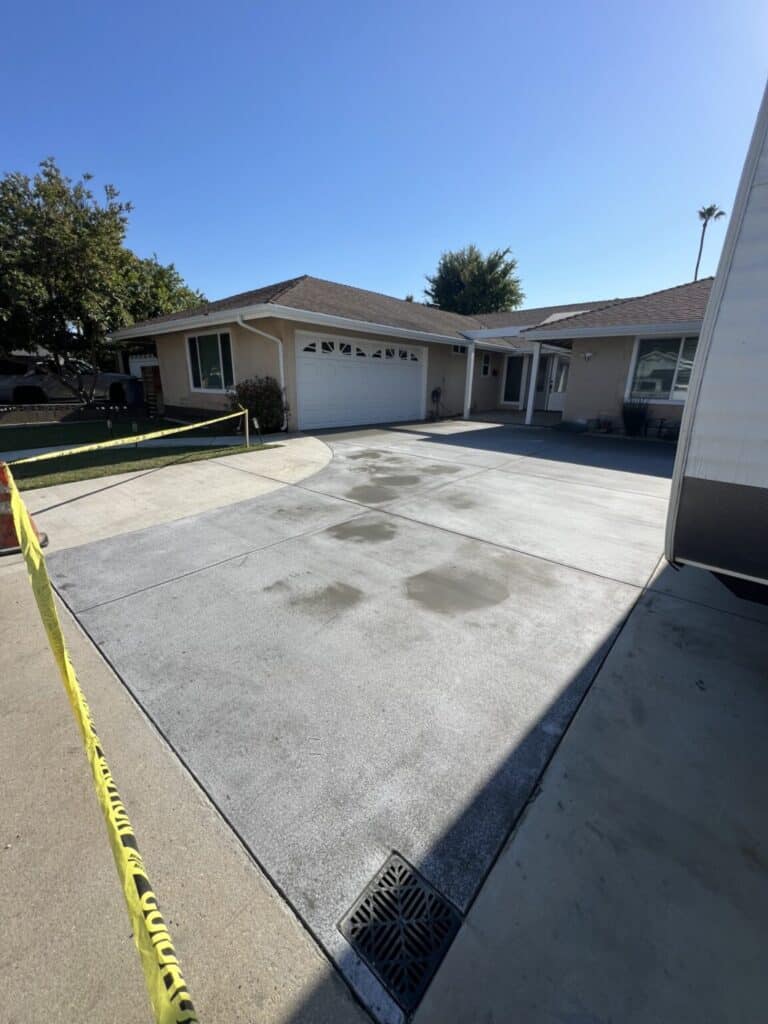 After
After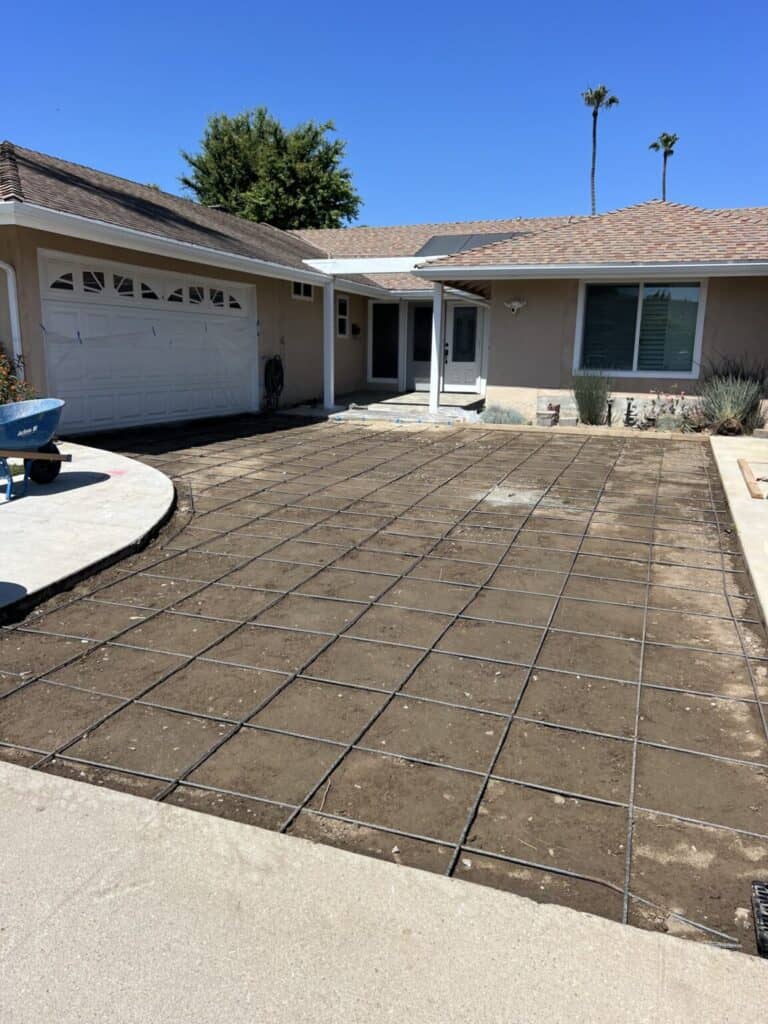 Before
Flatwork is its own trade, and it comes in four jobs
A residential concrete contractor builds the flat slabs around a house. That is different work from pouring a foundation. A foundation crew digs footings, sets anchor bolts, and hands off to a framer. Flatwork is the surface you see and use every day, so the finish matters as much as the strength.
VC Turf works as a concrete contractor alongside its turf and paver trades. The work splits into four services, each with its own page, and finished slabs are in the project gallery. VC Turf is a California licensed contractor, CSLB #1036018. Concrete is one of the outdoor hardscape services we install, so a driveway can go in on the same job as new turf or pavers.
Concrete driveways
The slab that carries the most weight, with reinforcement and joints laid out for cars and the occasional delivery truck.
Concrete patios
A poured pad for a table, a grill, or a whole outdoor room, graded so rain runs away from the house.
Walkways and porches
The front path, the side yard strip, and the porch or landing at the door. Smaller pours where a clean edge and an even step height matter most.
What sits under a slab that lasts
Most concrete problems start under the surface. A slab poured over loose dirt cracks and sinks no matter how good the finish looks on day one. Pick a number on the cross-section to see what each layer does and why we do not skip it.
Subgrade: the soil itself
Once the old slab and any roots are out, the dirt is graded to the right slope and compacted. Soft spots get dug out and filled.
Concrete is strong when pressed and weak when bent. If the ground settles, the slab bends, and a bent slab cracks.
Compacted base rock
Crushed rock goes over the subgrade and gets compacted until it stops moving, then raked to an even depth so the slab has no thin spots.
Base rock spreads a car's weight over more ground and gives water a path out.
Forms: the edges of the pour
Boards staked around the outline hold the wet concrete. They set the height, the slope, and every edge and curve.
The forms become the finished edges. A crooked form is a crooked driveway, forever.
Steel reinforcement
A grid of rebar or wire mesh sits on small chairs so the pour surrounds it instead of burying it at the bottom.
Steel does not stop cracks. It holds both sides of one together so it stays a hairline instead of opening and shifting.
The slab and its finish
Concrete goes in, gets screeded flat to the forms, then floated to bring the cream up. The finish comes last: broom, trowel, colored, or washed.
Timing decides the finish. Too early and the surface flakes later; too late and the broom will not bite.
Control joints
Straight lines tooled into the wet surface or saw-cut once the slab has set, dividing it into smaller panels.
Concrete shrinks as it cures and will crack somewhere. Joints tell it where. A crack inside a joint is invisible.
Curing is part of the job
Concrete does not dry. It hardens through a reaction that needs water, so a slab that dries too fast ends up weak and dusty on top. In warm weather the surface stays damp or covered while it cures.
Sealing comes after the cure
Once the slab has cured, a sealer closes the surface so oil, rust rings, and leaf stains wipe off instead of soaking in. Sealer wears with use and gets reapplied over the years.
Plain gray is one choice, not the only one
Broom is the default finish because it grips when wet. Smooth trowel suits a covered porch. Integral color and exposed aggregate are the decorative options, covered on the decorative concrete page. Color goes into the mix so it runs all the way through the slab. Exposed aggregate rinses the thin top layer of cement off before it hardens so the stone shows.
Concrete is one poured piece with the simpler bid and no sand joints. Pavers cost more to set, take a pattern, and let us lift and reset a section if a root moves it. We install both, so the answer is about look and repair, not our preference. Our paver installation page covers the other material, and the pavers vs concrete driveway post walks through the choice without taking sides.
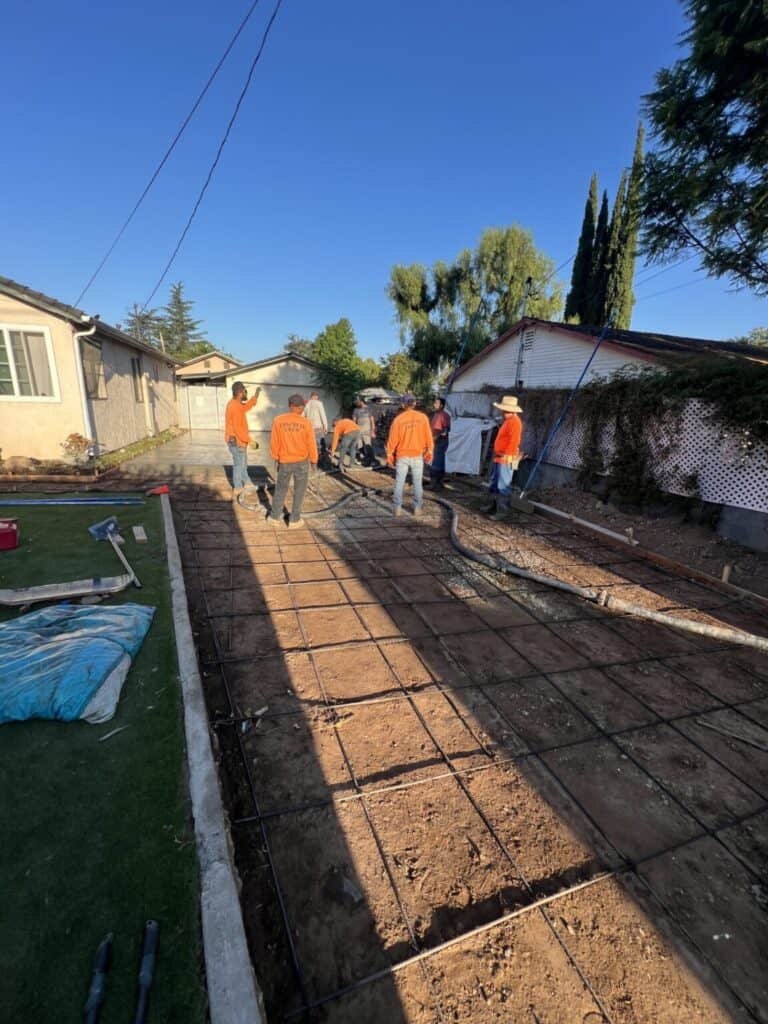 Before
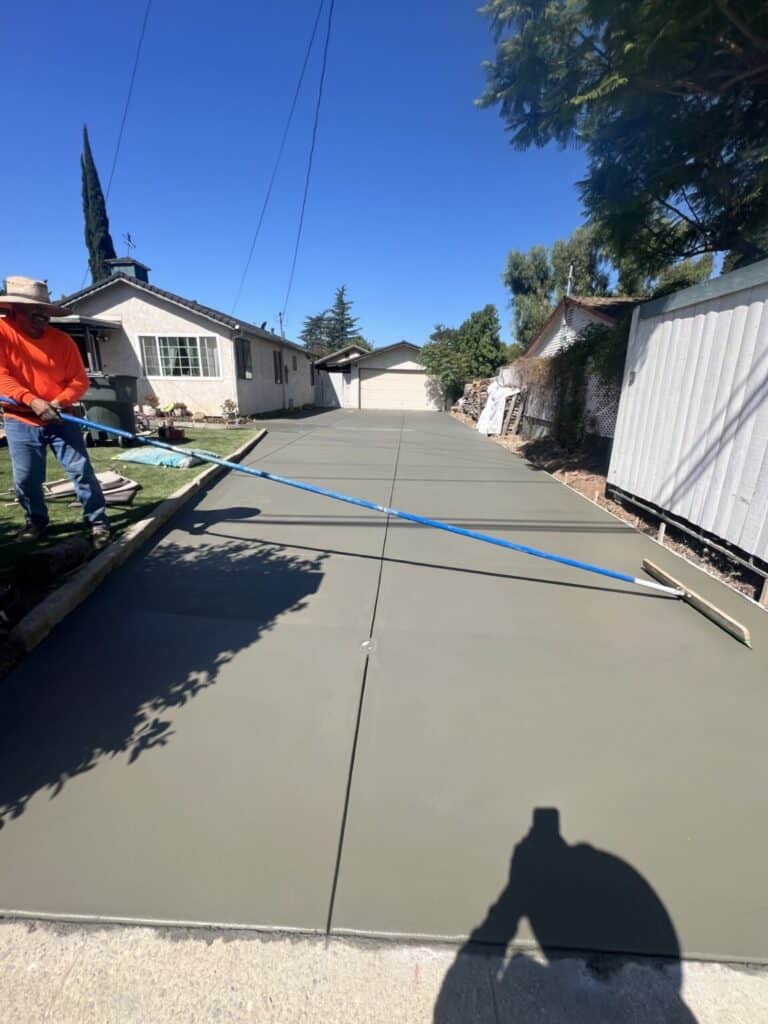 After
AfterHow the soil and the weather here change a pour
Clay inland moves a long driveway more than a small porch, so joint spacing changes by slab. Sandy coastal lots drain but need compaction before the base rock. Coastal air also argues for sealing sooner.
Mature trees are the other big one. Roots under an old driveway are usually why it heaved. We cut them back during demolition and site prep, and where a root will come back we talk about moving the edge of the slab. Summer heat changes the schedule. On a hot day concrete sets fast, so we pour early and finish in stages. What we never fight is frost. No freeze and thaw means no frost heave, one reason a well-built slab here stays flat for a long time. Water is the last piece. A slab that tilts toward the house sends rain into the foundation, so every pour is graded away from the walls, with drainage and grading added where the yard needs it.
Price follows square footage, how much old slab and root come out, the finish, and access for the truck and wheelbarrows.
What homeowners ask a concrete contractor
Foot traffic comes first, cars later, and anything heavy last. The wait depends on the mix and the weather that week, so we give you the dates for your slab before we leave.
All concrete shrinks a little as it cures, so a fine crack can show up, and the base, steel, and joints control where. A tight crack along a joint is normal and does no harm. A crack that opens, shifts, or lifts one side means the ground moved, which is what the compacted base is built to stop.
We take the old slab out. A thin layer poured over old concrete follows every crack beneath it and comes loose at the edges. Removal also lets us fix the soil and roots that caused the damage, which a cap never touches.
Often, yes. When the forms for all three are set ahead of time, the crew pours them from the same truck, which keeps the color even and means one cleanup instead of three. A slope change, steps, or a decorative finish on one slab can split the work into separate pours, and the estimate says so up front.
Yes. We don't say no to small projects. A single walkway, a porch landing, or a pad for the trash cans is a normal day for the crew, and it gets the same base, steel, and finish as a full driveway.
Tell us which slab. We will come out and measure it.
Send the estimate form or call during business hours. We look at the old concrete, the soil, the trees, and where the water goes, then price the job with the finish you want.