
Pet turf installation built for dogs, from the drain layer up
Pet turf installation is a different job from a lawn install: fewer layers under the turf so urine drains faster, a backing that drains through its whole surface, infill that will not hold odor, and edges a dog cannot lift. VC Turf builds dog yards, runs, and side-yard relief strips across Ventura County with turf from four trusted manufacturers, backed by manufacturer warranties.
Why a standard lawn install fails under dogs
Turf laid the standard way is built for feet, not for a dog that uses the same corner four times a day. Water passes through the backing, then has to get through weed barrier, a deep bed of fine base rock, and the soil. Urine soaks into the fabric and the fines on the way, and by August the yard smells the moment the sun hits it. Our artificial turf installation page shows the layers of a lawn install; a dog yard needs fewer of them, and different ones.
The rest is mechanical: a digger picks an exposed seam or edge, a low spot turns to mud, and a tall soft pile folds flat on the door-to-gate path.
How a pet turf installation is put together differently
Start with the water. Every layer under a dog yard is there because it does not hold liquid. The base is a drainage layer of clean, open rock instead of a deep bed of fines, graded toward a drain or a planting bed rather than a corner. Weed-barrier fabric stays out of relief areas; under a dog it is a trap that holds urine right beneath the blades. Where the yard already pools, drainage and grading work comes first.
The turf has a fully permeable backing with a high drainage rate, so liquid passes through the whole sheet. Between the blades goes a non-absorbent infill, a zeolite-type mineral or a coated sand, which does not hold urine the way plain silica sand does and which a hose can flush. The pile is shorter and denser than a party lawn: it brushes clean, dries faster, and does not mat on the dog's favorite route. Gopher mesh still goes under everything, since a mound in a dog yard is an invitation to dig. Edges are secured against digging, wrapped and pinned below a border of pavers, a concrete curb, or a buried bender board, so there is no lip to get a paw under.
Multi-dog yards, dog runs, and side-yard relief areas
One dog and a big yard spread the load; three dogs and a side yard concentrate it. For a run or a narrow relief strip we grade a steeper fall along its length, keep a drain at the low end, and size the rock layer for that volume. Where dogs share the yard with kids, a taller-pile backyard turf can cover the play area while the strip along the fence stays short and dense so it rinses fast.
Heat, shade, and hot afternoons
Turf holds heat in full sun, and paws feel it first. Newer turf runs cooler than the older product and mineral infill helps, but the honest answer is shade and water. We plan relief areas where the fence, the house, or a tree throws afternoon shade, and a rinse before a hot afternoon cools the surface fast.
The rinsing and enzyme routine that keeps it fresh
Solid waste comes off the same as on grass. For urine, a hose rinse once or twice a week in warm weather is the whole job when the base drains. Every few weeks, or whenever the yard smells after a warm day, an enzyme cleaner sprayed over the relief area and rinsed through breaks down what the hose misses. Skip bleach; it does nothing for odor at the base and can fade the blades. Brush against the grain a few times a year along the dog's usual route.
Six things to ask any pet turf bid
Open an item for why it matters, then tick it off when a bid covers it.
A backing that drains through its whole surface, over open rock, keeps urine from sitting. A standard base with weed barrier is a lawn install.
Plain silica sand soaks up urine and holds the smell. A zeolite-type mineral or coated sand does not, and rinses through.
A shorter, denser pile brushes clean, dries faster, and springs back on the route the dog runs daily.
Seams glued on tape and kept out of the relief strip. Edges wrapped and pinned below a border, so there is no lip to lift.
Mesh under the rock stops a mound from lifting the turf. In a dog yard, one mound becomes a dig site.
A hose bib within reach and a drain at the low end make the weekly rinse a two-minute job.
What to expect when the crew arrives
Most of the work happens before the turf leaves the truck.
Demo, haul-off, and grade
The old lawn or worn turf comes out with the roots. We grade the relief area to fall toward a drain and fix the low corner while the dirt is open. A concrete pad in the way comes out under demolition and site prep.
Gopher mesh and the drainage layer
Mesh goes flat on the graded soil. Over it, open rock is compacted into a layer that stays porous, thinner than a lawn base and free of fines.
Turf, seams, and edges
Rolls are laid with the blades leaning the same way, seamed on tape with adhesive, stretched, and pinned. Edges are wrapped below the border.
Infill, brush, and first rinse
The pet infill is brushed in so the blades stand up, then the yard gets its first rinse so you can see where the water goes. We walk it with you before we leave.
What decides the price, and how long a dog yard lasts
Four things move the number on a pet turf bid. Area comes first: turf, rock, and infill are bought by the square foot. Drainage work varies the most; a yard that drains needs a rock layer, while a yard that pools needs a drain line and grading first. Infill type is third, since a pet infill costs more per bag than sand. Demo is last: worn turf, a dead lawn, and a concrete pad each haul differently.
The manufacturers rate their turf for 15 to 20 years, with products backed by manufacturer warranties. A dog wears one route before anything else, which is why the relief strip gets the densest pile. The work is done by a California licensed contractor, CSLB #1036018.
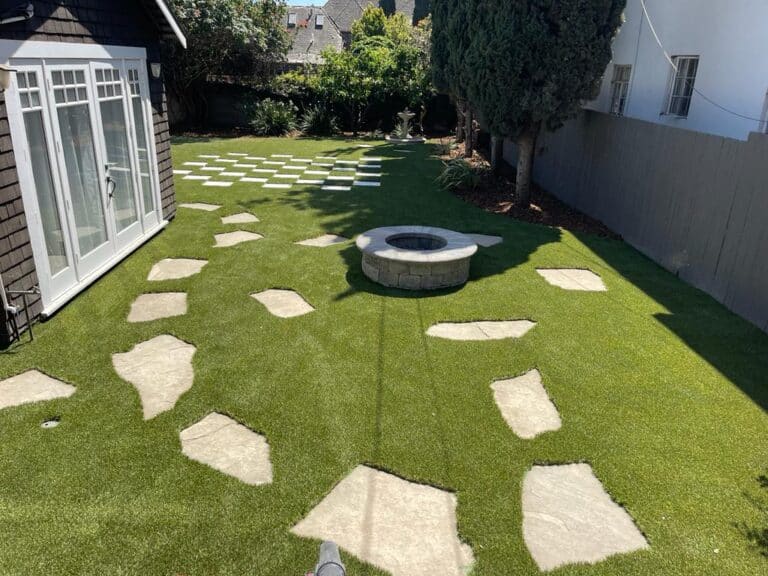 Backyard turf, after
Questions dog owners ask about pet turf
Not when the layers under it drain. Odor comes from urine held in weed-barrier fabric, fine base, or absorbent sand, and a pet turf installation leaves all three out. A weekly rinse and an enzyme spray every few weeks keep a busy yard neutral.
Through the backing and the infill into the open rock layer, then into the soil or out through a drain at the low end of the grade. Nothing under the blades can soak it up.
A dog digs where there is a lip to lift. We glue seams on tape, wrap the edges and pin them below a border, and lay gopher mesh to stop the mound that usually starts a dig.
Yes, in full sun. Shade is the real fix, so we place the relief strip where the fence or house shades it by afternoon, and a quick rinse before the dog goes out cools the blades.
About ten minutes a week: a hose rinse in warm weather, an enzyme spray every few weeks, and a brush along the dog's route a few times a year. No bleach.
Get a free estimate for a dog yard, run, or relief strip
Tell us how many dogs use the yard and where the problem corner is. We will measure, check how it drains, and bring pet turf samples and the infill. Send the form or call.