
Decorative rock and ground cover: decomposed granite, gravel, and mulch that finish a water-wise yard
Decorative rock, gravel, and decomposed granite are the ground covers VC Turf installs across Ventura County to finish the parts of a yard that used to be lawn or bare dirt. In a Ventura County dry season, these covers replace irrigated ground with beds that need no sprinkler at all. Bark and mulch go where plants need cool, damp soil. Under all of it goes the work you never see: grading, weed barrier, gopher mesh, and drip lines, done in the right order.
Three covers, three different jobs
Pick a material to see where it belongs, what has to go under it, and how it looks after a few summers. The right answer for a path is the wrong answer for a bed of natives.
Decomposed granite
Garden paths, side yards, a pad under a bench or fire pit, the gaps between stepping stones, and any ground you walk on every day. It reads as natural and stays firm underfoot.
Graded soil, a compacted base where the path carries weight, then the granite placed in layers, wet down, and plate-compacted so it locks. Edging on both sides holds the shape. Stabilized granite, mixed with a binder, gives a harder crust for slopes and busy paths.
The surface firms up with use. Loose granite sheds fine dust that tracks indoors for the first months, so we keep it off the doormat line. A rake and a thin top-up every few years brings the color back.
Skip it on a slope without a place for water to go, and skip loose granite right against a pool.
Decorative rock
Beds around shrubs and natives, the strip along the house, borders beside a driveway, slopes where mulch would wash off, and dry creek beds that carry runoff. Pea gravel for a fine look, river rock for a rounded one, cobble where you want weight.
Graded soil, gopher mesh where gophers work, weed barrier pinned tight, drip lines laid on top of the fabric to each plant, then the rock spread to an even cover. Edging keeps it out of the turf and off the pavers.
Rock does not break down. Dust and leaves settle in it and a hose or a blower on low clears them. Colors mellow a shade. Seeds that land on top still sprout, but they pull out easily because the barrier stops the roots.
Dark rock holds heat next to a patio; lighter blends stay cooler and hide dust.
Bark and mulch
Planting beds with natives and shrubs, the circle under a tree, vegetable and flower beds, and anywhere roots need shade and moisture. It is the cover for ground that is meant to grow something.
Bare, graded soil with drip lines run to each plant, and gopher mesh under new planting areas. No weed barrier: the plants need water and air to reach the soil, and the mulch itself shades out most weeds.
It breaks down and feeds the soil, which is the point. The rich brown fades to gray in the sun, and the layer thins, so it gets topped up every year or two. Wind and heavy rain can move fine mulch; larger bark stays put.
Keep it pulled back from trunks and stems so bark does not sit wet against the plant.
The layers decide whether the cover still looks right in five years
Rock dumped on dirt grows weeds by the second spring and sinks into the soil by the third. Every ground cover we install sits on a stack, built in this order, and each layer only works if the one below it was done.
Graded and compacted ground
Old lawn, roots, and debris come out. The soil is shaped so water runs away from the house and toward a drain or a rock bed, then compacted so the cover does not settle in spots. Under a granite path that carries weight, a compacted base goes in first.
Every coverGopher mesh
Where gophers are active, galvanized mesh is laid over the soil and pinned before anything else goes down. It stops the mounds that push rock aside and the tunnels that eat the roots of new plants.
Beds and planting areasWeed barrier
Under rock and under loose granite, a woven fabric is pinned tight with the seams overlapped and cut around each plant. Water passes through; roots from below do not. It stays out of mulch beds on purpose, because plants there need the soil open.
Rock and granite onlyDrip lines and plants
Drip tubing runs on top of the fabric to each plant, with an emitter at the root ball, so water goes into the ground and not onto the rock. Natives and drought-tolerant shrubs go in through the barrier, then the cover is spread around them.
Anywhere something growsCompacted granite paths, rock beds that drain, and mulch that holds water
Decomposed granite is crushed stone fine enough to pack like a dirt road and pale enough to brighten a shaded side yard. Loose granite is the cheaper install and the softer look; stabilized granite has a binder mixed in and sets harder, which is what a sloped path or a heavily used walk wants. Either way it needs a base and compaction, because granite spread loose on soft dirt turns to mud in the first rain. Steel, aluminum, or bender-board edging holds the edges, and we set the granite a little below the edging so it does not spill.
Decorative rock covers a wide range. Pea gravel is small and rounded and fills between flagstone and stepping stones well. River rock is larger and smooth, good in a bed that gets looked at more than walked on.
Cobble is the heavy piece that lines a dry creek bed, which is a rock-lined channel that carries roof and yard runoff across the lot instead of letting it pool. Where the runoff problem is bigger than a channel, we tie the bed into drainage and grading work. Colors run from gray and blue-gray through tan, gold, and rust; a blend hides dust better than a single tone.
Bark and mulch are the covers for soil that is meant to stay alive. They keep moisture in, keep the ground cooler, and break down into it. Because they are organic, they are replenished rather than replaced.
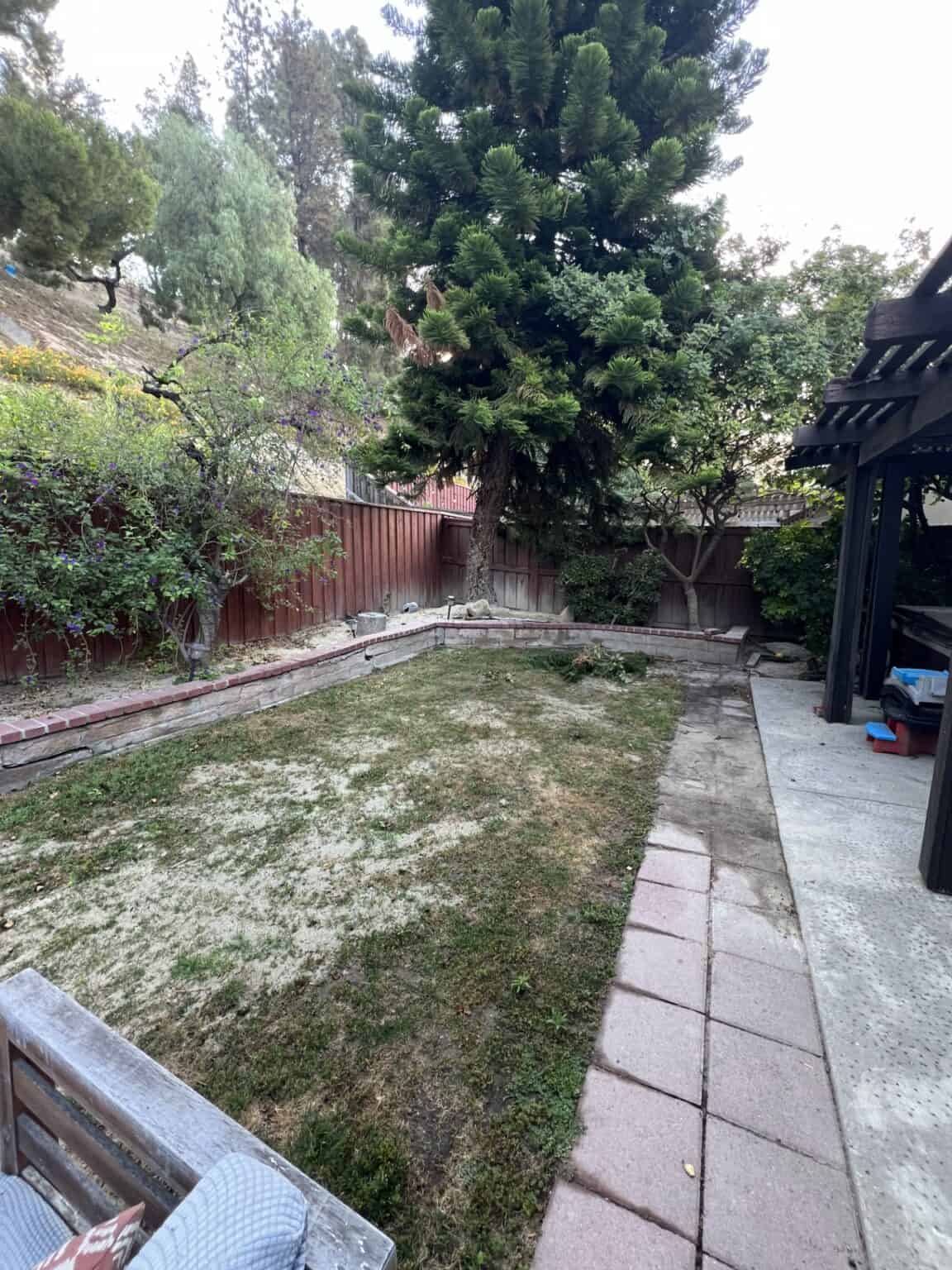 Before
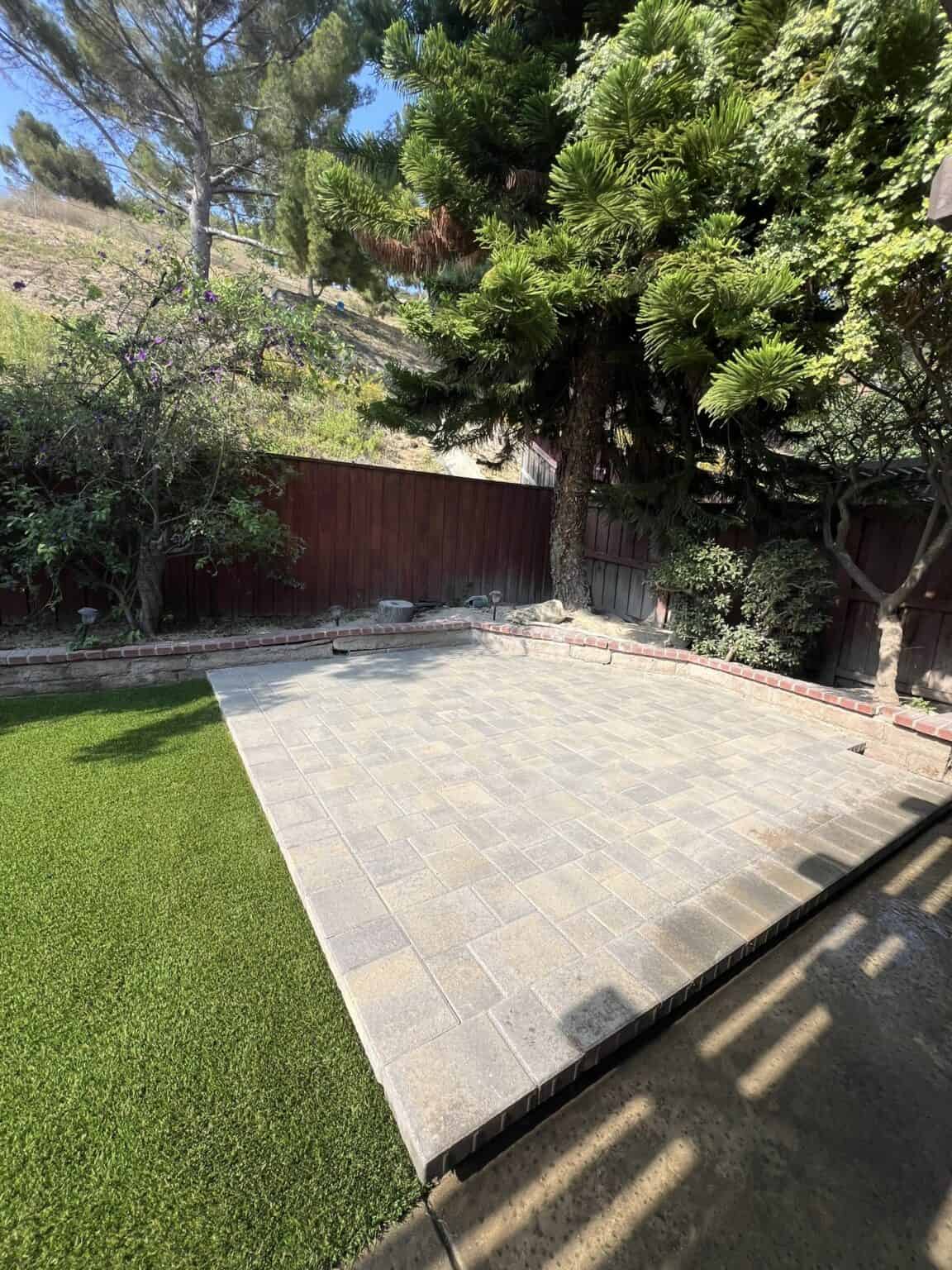 After
AfterWhere the rock meets the lawn and the patio
Ground cover rarely goes in alone. The usual yard here is a patio or path in pavers, a lawn in artificial turf, and rock or granite in the beds and borders between them. The lines where those materials meet are what make the yard look designed. A steel edge between turf and rock keeps each on its side; a paver border between granite and a patio lets the two sit at the same height; a low block planter wall turns a sloped bed into a flat one that holds its mulch.
Water is why homeowners keep asking for this combination. Each drought cycle brings new watering days and higher tiers, and a lawn is the first thing that stops paying its way. Rock and granite need none. Mulched natives on drip need a fraction of what turf grass did. A rock bed shaped as a channel also takes the winter runoff that used to run down the driveway and into the street. Many of these jobs start with lawn removal and end with the beds; all of it sits under our paver installation work and one estimate covers the yard.
What decides the price, what happens on the day, what it needs after
What decides the cost
Square footage first, then the material, since cobble and stabilized granite cost more than loose granite or bark. Depth of cover, the amount of edging and which kind, whether weed barrier and gopher mesh go in, how many plants and how much drip line, and what has to come out before we start. A bed reached through a side gate takes longer than one off the driveway. The estimate lists each of these so you can see what moves the number.
What to expect on the day
The crew marks the beds and paths, clears and grades, then works the stack from the ground up: mesh, fabric, drip, plants, cover. Material arrives in bulk and is moved by wheelbarrow, so a clear path from the curb matters. Granite paths are compacted before we leave. The last hour is edging checks, a rinse of the rock, and a sweep of the pavers and driveway. VC Turf holds California contractor license CSLB #1036018.
How long it lasts and what it needs
Rock does not break down, so it only needs raking level and a rinse when dust builds up. Granite paths get a light rake to lift footprints and a thin top-up every few years, sooner on a steep run. Mulch is topped up as it thins. Weeds that sprout on the surface come out by hand while they are small. Drip lines get a look each spring for a clogged or chewed emitter.
Signs the beds are due
Bare dirt showing through thin rock, weeds coming up through the middle of a bed rather than the edges, a granite path that has gone soft or spread past its border, mulch that has faded to gray and blown into the lawn, or a low spot that holds water after rain. Any of these means the layer under the cover has failed or was never there. See finished beds and paths in the gallery.
What homeowners ask about rock, granite, and mulch
No, and we will not quote it that way. Grass and its runners live through a layer of rock and come up between the stones within a season, and the rock ends up sitting higher than the walk beside it. The lawn comes out first and the ground is lowered so the finished rock sits level with the edges around it.
Loose granite on a slope with nowhere for water to go will move, and you will find it at the bottom of the path after the first storm. On flat ground with edging and a slight crown it stays put. For a sloped run we use the stabilized mix and give the water an exit at the low end, either a rock swale beside the path or a drain.
A wide bed of dark rock in full sun does warm the air above it in the afternoon. The fix is in the design: lighter colors, plants spaced so they shade the rock as they grow, and mulch rather than rock in the beds nearest the seating area. Rock in a narrow border or a shaded side yard makes no difference you would feel.
A leaf blower on its lowest setting, held high, lifts leaves off river rock and cobble without scattering the stones. Pea gravel is too light for that, so it gets a plastic leaf rake. If you have a tree that drops all fall, tell us at the estimate; larger rock under that tree is easier to keep clean than small.
Yes, and it is a common small job. We set an edge along the existing turf or patio so the new cover has a clean line to meet, match the finished height to what is there, and bring rock samples so the color works with the pavers. If the beds already have sprinklers, we cap them and switch the plants to drip at the same time.
Get a free estimate for rock, granite, or mulch beds, or the whole yard
Tell us which beds, paths, and borders you are tired of watering or weeding. We will measure them, walk the drainage, bring rock and granite samples, and price the layers along with the cover. Send the form or call and we will set a time.