Flagstone and stepping stones: natural stone paths and patios that stay put
Flagstone and stepping stones put real stone underfoot in a Ventura County yard without the look of a poured slab. VC Turf sets irregular flagstone as dry-laid garden paths and casual patios, sets it in mortar over concrete where you want a tight formal surface, and places stepping stones through turf, gravel, or decomposed granite so the path reads as part of the garden instead of a strip across it.
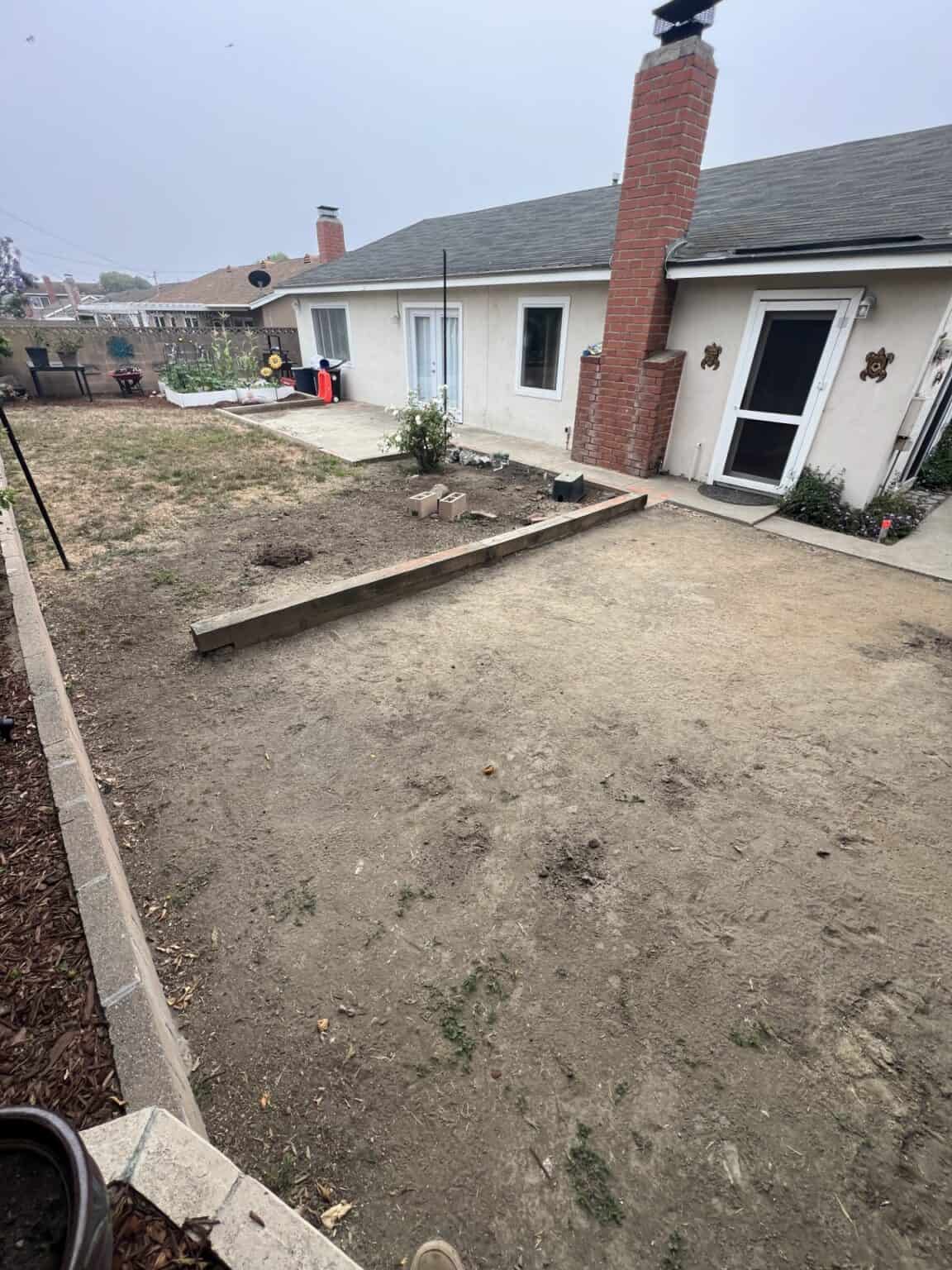
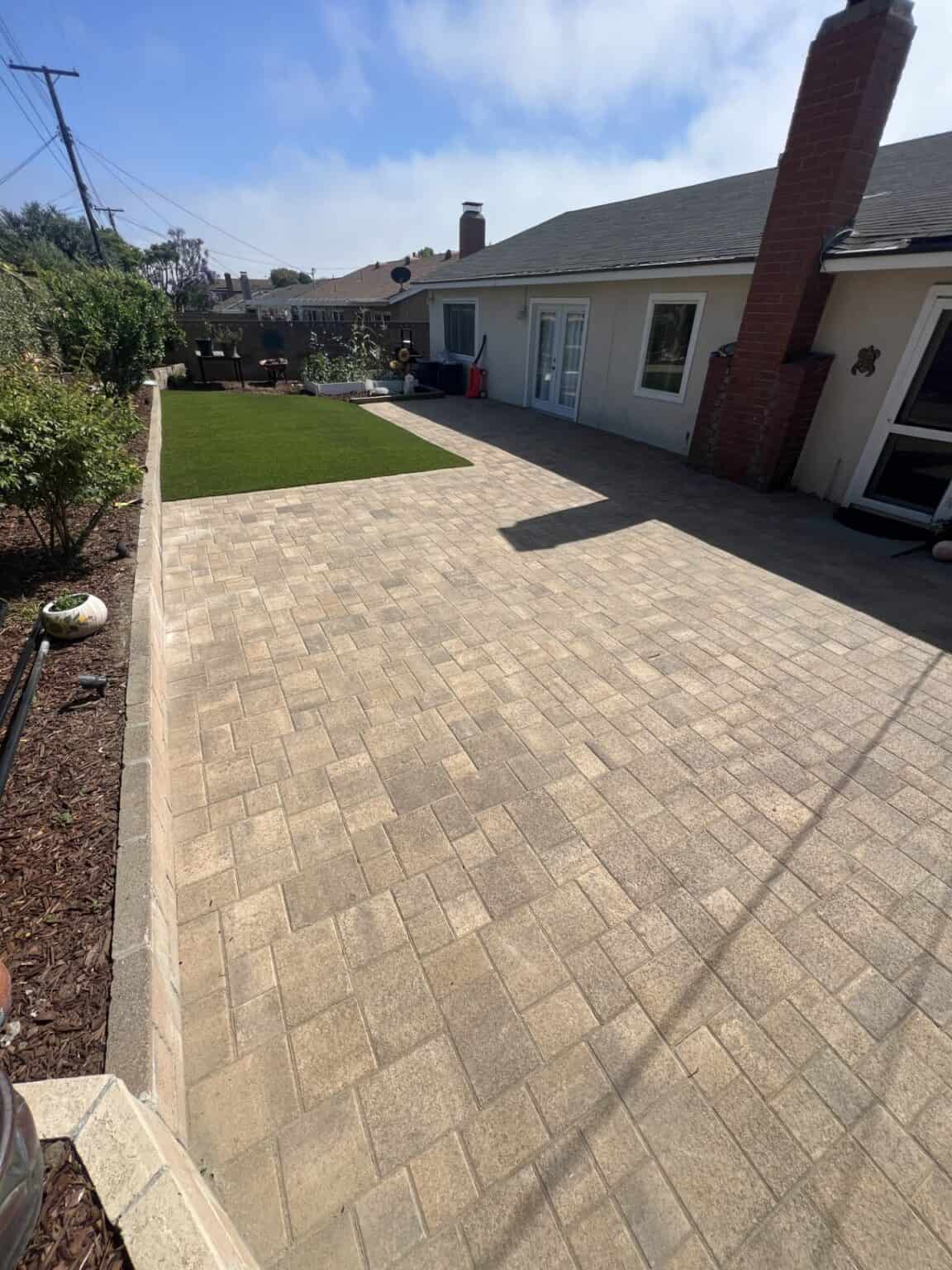
Flagstone is natural stone, split into slabs, and the way it is set decides how it behaves
Flagstone is quarried stone that splits along its own grain into flat slabs. It comes as irregular pieces with the shape the stone broke into, or as cut rectangles in a few sizes. The irregular pieces are fitted on site like a puzzle, and no two patios come out alike. It is the stone side of our paver installation work, and the crew that builds a paver base builds a flagstone base.
It belongs where you want the yard to feel planted rather than paved: a garden path between beds, a casual patio under a tree, a pool surround with soft edges, a walk that crosses a lawn or a bed of decomposed granite to reach a gate.
There are two ways to set it, and they give different results. Dry-set drains through its joints, can wander in and out of a garden, and costs less because there is no slab under it. Mortar-set is tight, level, and easy to keep clean, holds patio furniture without a wobble, and costs more because the slab comes first.
Dry-set flagstone sits on compacted base and sand with filled joints, and any piece can be lifted and reset. Mortar-set flagstone is bonded to a concrete slab with grouted joints, one level surface that stays put but cannot be opened.
Choosing between them comes down to how you will use the space. Dining and entertaining on a level pad point to mortar-set. A path, a seating nook, or anything meant to blend into planting points to dry-set. If what you really want is a uniform, tight surface with no fitting work, a paver patio may fit better than either.
Four ways to lay natural stone, seen from above
The same pile of stone can become a tight patio, a loose garden walk, or a line of stepping stones across a lawn. Pick a layout to see how it looks, where it belongs, and what it asks of you afterward.
Plans are simplified. Real pieces are fitted on site to the stone we have in hand.
Stepping stones are spaced for a stride and set so nothing catches on them
A stepping stone path is a run of single stones with ground between them, and the spacing is the whole design. We lay the stones out loose first and walk them at a normal pace, then shift them until a foot lands in the middle of each one without a stretch or a shuffle. Stones with a flat, broad top go where a foot lands; smaller pieces fill a turn.
Through a lawn or artificial turf, each stone sits flush with the surface so a mower or a power broom passes over it. In gravel or decomposed granite the stones can sit a touch proud, with the bed raked to their edges. Large single stones give the loosest, most natural line; cut pavers used as stepping stones give a neater, more regular one. A path that carries daily traffic, trash cans, or a stroller is better as a continuous paver walkway, and we will say so.
Stability comes from the bed, not the weight of the stone. Every piece is thick enough that it will not crack under a foot at its thinnest edge, and every piece is bedded fully, so no corner hangs in the air and no stone rocks when stepped on. A stone that rocks is set on a hump; we scrape the bed and set it again until it sits dead.
Color and texture are chosen from samples in your yard, in your light. Warm tans and golds, gray-greens, and rust-streaked pieces all come as flagstone. A cleft face has a natural grip; a smoother sawn face looks cleaner but is slicker when wet. A mix of tones reads as natural stone; one flat color shows every leaf stain.
Decomposed granite joints
Fine tan granite that packs firm when tamped and wetted. The default for dry-set flagstone in a garden. Part of our decorative rock and ground cover work.
Gravel joints
Small clean stone in wider gaps. Drains the fastest and never turns to mud. Rakes out of place more easily than granite, so it suits wider joints.
Polymeric sand
Sand with a binder that sets when misted. Best in narrow joints on a firm base, where it locks the pieces and blocks weeds and ants.
Ground cover plants
Low, walkable plants in soil-filled joints. The softest look, and the only joint that needs water. We set the stones with room for roots and a drip line nearby.
Sun, no frost, and drainage decide the details here
There is no freeze here to pry joints apart, and full sun fades a single-tone stone faster than a blend. Dark stone on a west-facing Ventura County patio gets too hot for bare feet by mid-afternoon, so around a pool or on an exposed patio we steer toward lighter tans and grays and keep the dark, rust-streaked pieces for shaded paths and accents.
Water still matters. A dry-set path drains through its joints, but the base under it needs somewhere to send that water, and a mortar-set patio is pitched away from the house toward a bed or a drain. Where a yard already puddles, the flagstone work ties into drainage and grading so the new surface is not sitting in the low spot.
On the day, the old surface or sod comes out, the base goes in and is compacted, the stones are laid out loose and fitted, then bedded and jointed. Keep off it until the joints have set. Pieces are cut only where a curve or an edge needs it, and the site is swept and rinsed before we leave. Send the form or request an estimate and we will look at the ground first.
Upkeep is light. Refill joints where the fill has washed or settled, pull weeds while they are small, and rinse off leaf stains before they set. Sealing is optional; it deepens the color and slows staining, and a matte sealer keeps the grip. Finished stone work sits alongside our paver and turf projects in the gallery. VC Turf is a California licensed contractor, CSLB #1036018.
Square footage, whether the stone is dry-set or mortared, irregular versus cut pieces, the joint fill, what has to come out first, and access all move the estimate, which is free and done in your yard.
What people ask about flagstone and stepping stones
Often, yes, and it is the least work for a mortar-set patio because the slab is already there. The slab has to be sound and draining; a cracked or heaving slab passes its movement straight into the stone. The finished surface also ends up higher than the old one, so we check door thresholds and the step down to the yard before saying yes.
Yes, and they are easiest when planned with the turf. The stones go into the compacted turf base first, then the turf is cut around each one and its edge is secured so it cannot lift. Adding stones to turf that is already down means cutting and re-securing the edges, which works but takes more care to hide.
On a dry-set surface, they should be. An empty joint collects leaves and seed, and the fill is what braces each piece against its neighbors so edges do not chip. The choice of fill is yours; the one thing we ask is that planted joints get a water source, because a stone joint bakes in summer.
Either the bed under it has a high spot, or the fill washed out from one side and the stone tipped. Both are fixable on a dry-set surface: the stone comes up, the bed is leveled and recompacted, and the stone goes back with fresh joint fill. If several stones rock across the same area, the base itself has settled and that section gets rebuilt rather than patched.
Not when the stone is chosen for it. A natural cleft face grips wet feet; a honed or polished face does not, and a glossy sealer makes any stone slick. For a pool surround we use a textured face, pitch the surface away from the water, and either skip sealer or use a matte one, then tell you which stone was used so a future repair matches.
Get a free estimate for a flagstone patio or a stepping stone path
Tell us where the path goes or how you will use the patio. We will measure, check how the ground drains, and bring stone samples so you can see the color in your own light. Send the form or call, and we will get back to you to set a time.