Lawn removal and turf conversion: lawn replacement without the water bill
Lawn replacement is a decision before it is a product, so this page lays out both sides for a Ventura County yard: what a lawn costs to keep, where artificial turf wins and where it does not, and how the grass comes out.
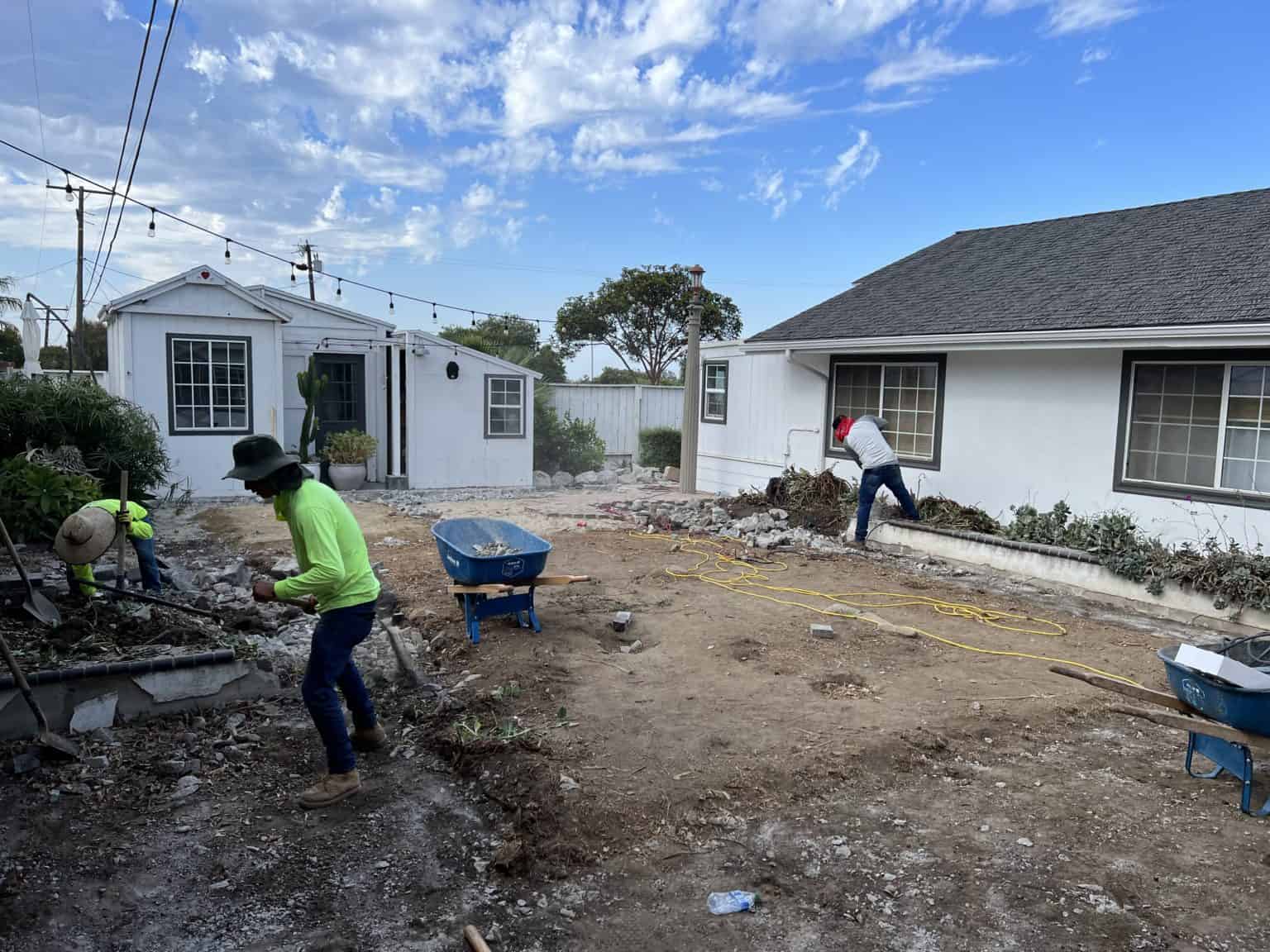 Before
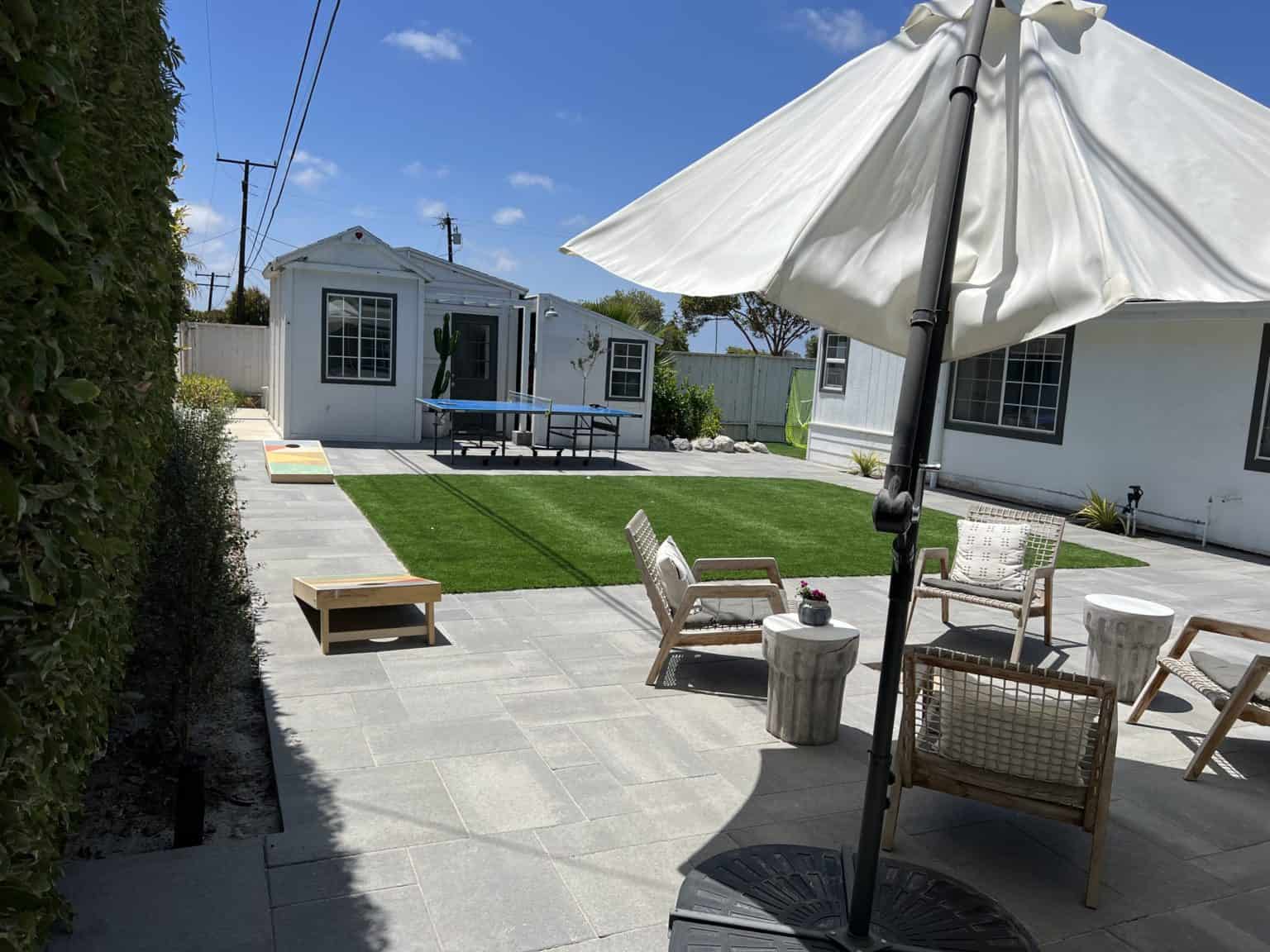 After
AfterLawn and sprinklers out, turf in on a compacted base.
What keeping a natural lawn costs in a dry year
Grass is the thirstiest thing on most lots. According to National Geographic, landscaping accounts for about half the water Californians use at home, and the lawn takes most of that share. Through a dry summer the sprinklers run on a schedule the water agency keeps shortening, the bill climbs a tier, and the grass browns anyway.
People call us for the same handful of reasons: the water bill, the lost weekends, dust and pollen, kids who need somewhere to play, or a yard that simply looks tired. We do not install sod, and the water shortage is why. When someone wants green, we build it with the turf on our artificial turf installation page.
A fair comparison, one topic at a time
We sell turf, so read the grass side of each topic as the case we have to beat.
Upkeep: natural grass
Mowing, edging, raking, fertilizing, and irrigation on a schedule, plus grub and insect control once something starts eating it. Bare spots get reseeded and sprinklers get repaired.
Living grass, and it needs a living schedule.Upkeep: artificial turf
Nothing to mow, feed, or water, and nothing for insect pests to eat. Dust rinses off with a hose, and mud stops tracking into the house. It still needs leaves raked off and an occasional brushing where blades mat underfoot.
Less work, not zero work.Look and feel: natural grass
Real grass feels like real grass, and nothing else fully matches it. It also looks its best for only part of the year here. The rest of the time it is thin, patchy, or brown, and every gopher mound shows.
Unbeatable in April. Rough by August.Look and feel: artificial turf
High-end turf is soft underfoot but not identical to grass, and it makes a soft rustle when you walk on it. The good products mix several blade colors over a brown thatch layer, which is what makes them read as real from the sidewalk. Low-end turf is shiny and one flat shade of green, and it reads as fake from the street.
Grade decides whether it fools anyone.Cost over time: natural grass
Sod is cheaper to put in. It then costs money every month, for as long as the lawn exists: water, mowing or a gardener, fertilizer, pest control, and sprinkler repairs.
Low up front, never paid off.Cost over time: artificial turf
Up front, turf is the more expensive of the two. From then on the water, mowing, and insect-control spending ends, and the products we install are designed to last 15 to 20 years. What a bid contains is spelled out in our cost per square foot post.
Higher day one, then the meter stops.Environment: natural grass
Living grass filters runoff before it reaches the storm drain and cools the air around it. Keeping it alive means fertilizer and often insecticide, which ride along in that runoff, plus a gas mower adding noise and exhaust most weekends.
Cools and filters, at a chemical cost.Environment: artificial turf
Turf needs no fertilizer or insecticide, so what runs off it is cleaner, and there is no mower. It also holds heat: on a 90-degree-plus afternoon in full sun it gets hot underfoot. Newer turf runs cooler than the older products, and a quick rinse brings the surface down fast. On environment there is no clear winner, and we say so.
Cleaner runoff, hotter surface.Water: natural grass
A lawn is irrigated through the entire dry season, which in this climate is most of the year. When restrictions tighten, you either bend the rules or watch it brown.
The single biggest use of water on the lot.Water: artificial turf
Turf uses no irrigation at all. The sprinkler zone that fed the lawn gets capped, and the water that is left goes to drip lines on plants that actually need it. The first summer bill after the zone is capped is the proof.
Zero irrigation on the turf itself.Turf is one option. The best yards mix several.
Turf from fence to fence can look like carpet. The yards that hold up pair it with rock, planting, and hardscape, drawn in 2D CAD at the consultation so you see the layout before anyone digs.
Artificial turf
The green part, sized to the area that actually gets used, on a compacted base with gopher mesh and weed barrier.
DG, rock, and mulch
Decomposed granite paths, rock beds, and bark or mulch under plantings cover the ground turf does not need to. See decorative rock and ground cover.
Native and drought-tolerant plants
Succulents, cactus, and natives on drip lines put water at the roots and give the yard shape and color without a sprinkler head.
Pavers, planters, and seating
Paver patios and walkways, planter walls, railroad-tie beds, a fire pit, or a play area around the turf, by our paver installation crew on the same job.
The removal, in the order the crew does it
Whether turf stays flat for the 15 to 20 years it is designed to last comes down to the ground under it, and most of that work is removal.
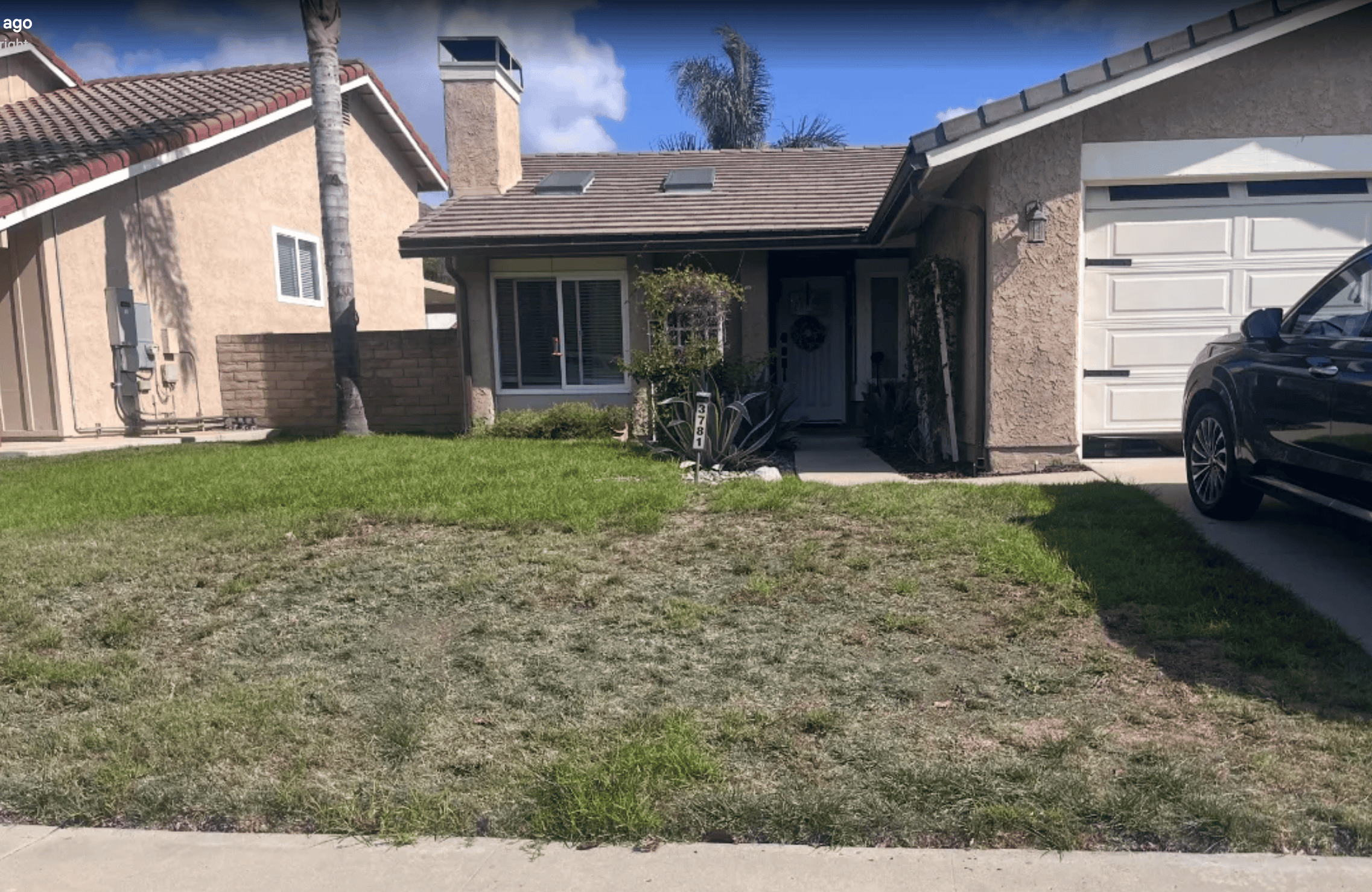 Before
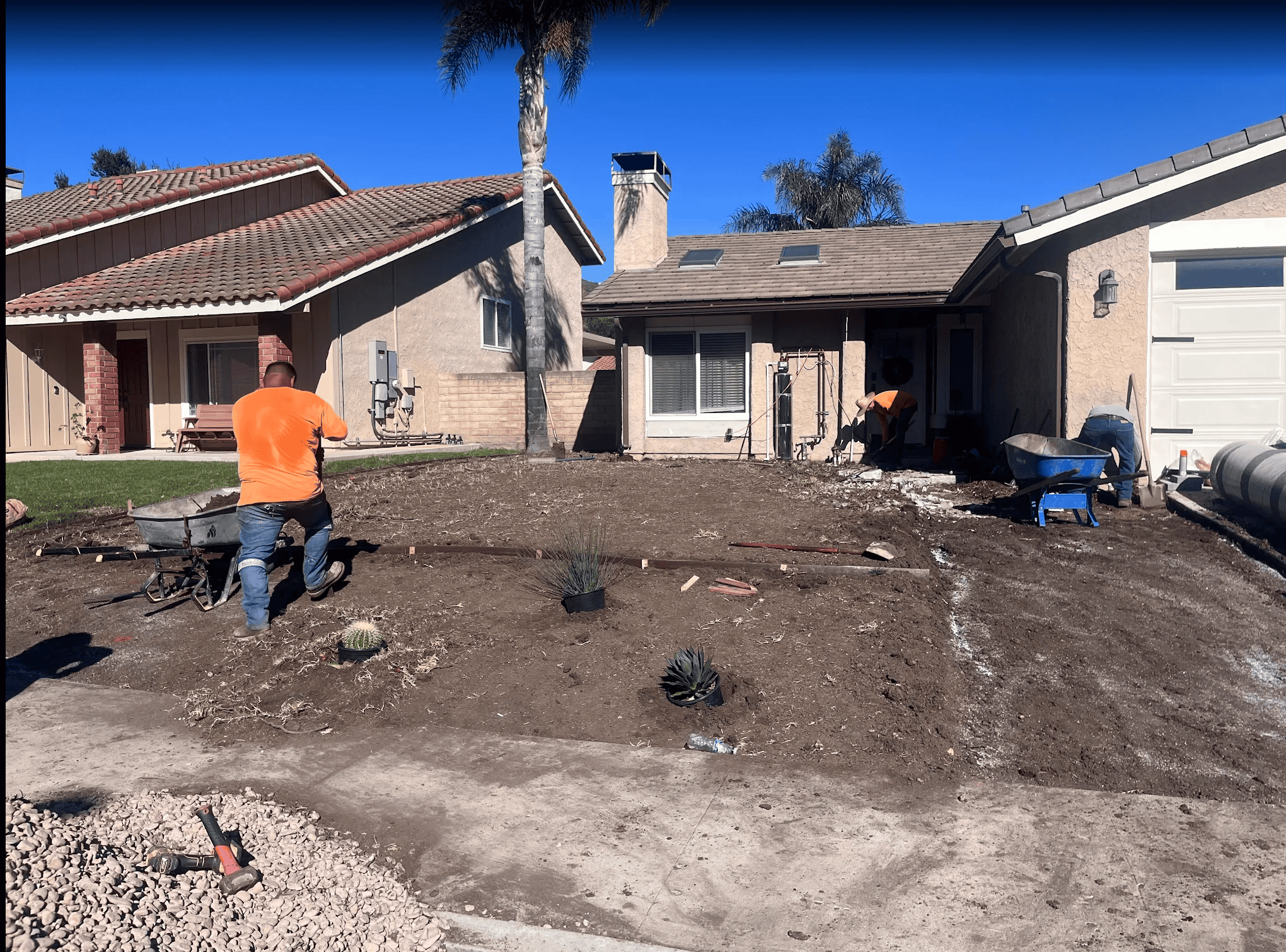 During
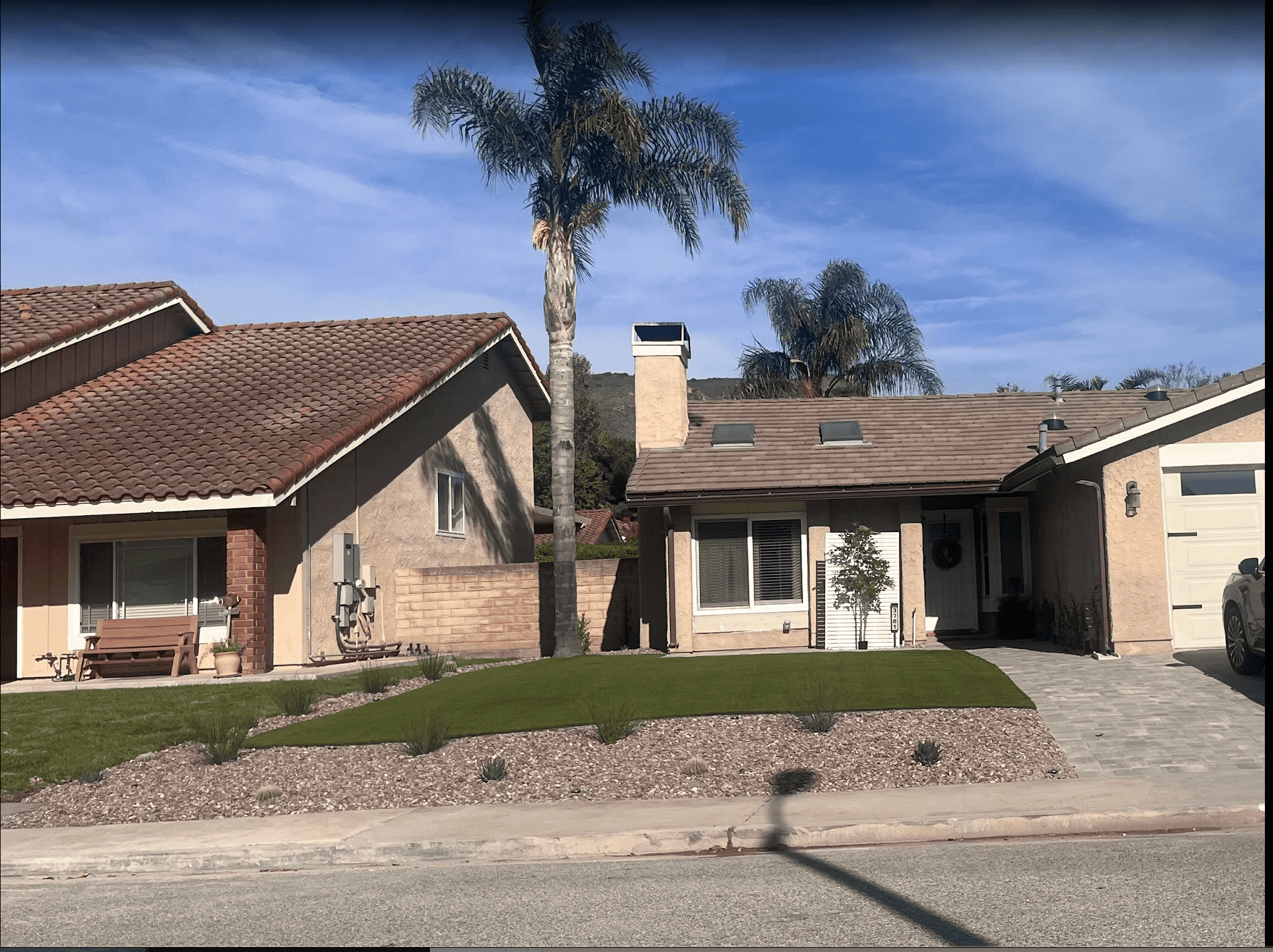 After
AfterLawn, stripped soil, finished turf and hardscape.
Cut and lift the lawn
A sod cutter strips the grass in rolls where the lawn is dense enough to hold together; where it is patchy or root-bound we excavate. Either way the top layer and the roots leave, so nothing regrows under the turf.
Sprinklers capped or pulled
Heads and lateral lines under the lawn are pulled or capped at the valve; lines that will feed new drip beds stay, marked before digging starts.
Haul-off
Sod, roots, and old edging leave on the truck. A slab, wall, or dead planter coming out too is demolition and site prep on the same visit.
Grade for drainage
The exposed soil gets a fall away from the house, and spots that used to pool get drains while the ground is bare: drainage and grading work.
Base, then turf, then the rest
Only now does building start: gopher mesh, compacted class 2 base, weed barrier, turf from established manufacturers, backed by their warranties, installed by a California licensed contractor, CSLB #1036018. Rock, decomposed granite, plants, and drip lines follow, and the crew cleans to the sidewalk.
What decides the price, and what to expect on the day
Square footage sets the material. The removal half of a lawn replacement adds its own variables: how rooted the lawn is, whether concrete or a planter comes out with it, how many sprinkler lines need capping, gate width (a narrow side gate means wheelbarrows, not a machine), the soil, the turf grade, and how much of the yard goes to turf versus rock and plants. All of it goes on one written estimate.
Lawn-replacement rebate programs exist in California and change often, so check with the water agency that bills your address before you commit; our turf replacement rebate post explains how they generally work. If an HOA governs the front yard, pull its guidelines too; some limit what replaces a lawn and how the edges are finished.
On the day, the crew walks the plan with you, marks the sprinkler lines, and starts cutting. Expect a truck at the curb, noise, and dust; keep pets inside and cars out of the driveway. We walk the finished yard with you before we leave.
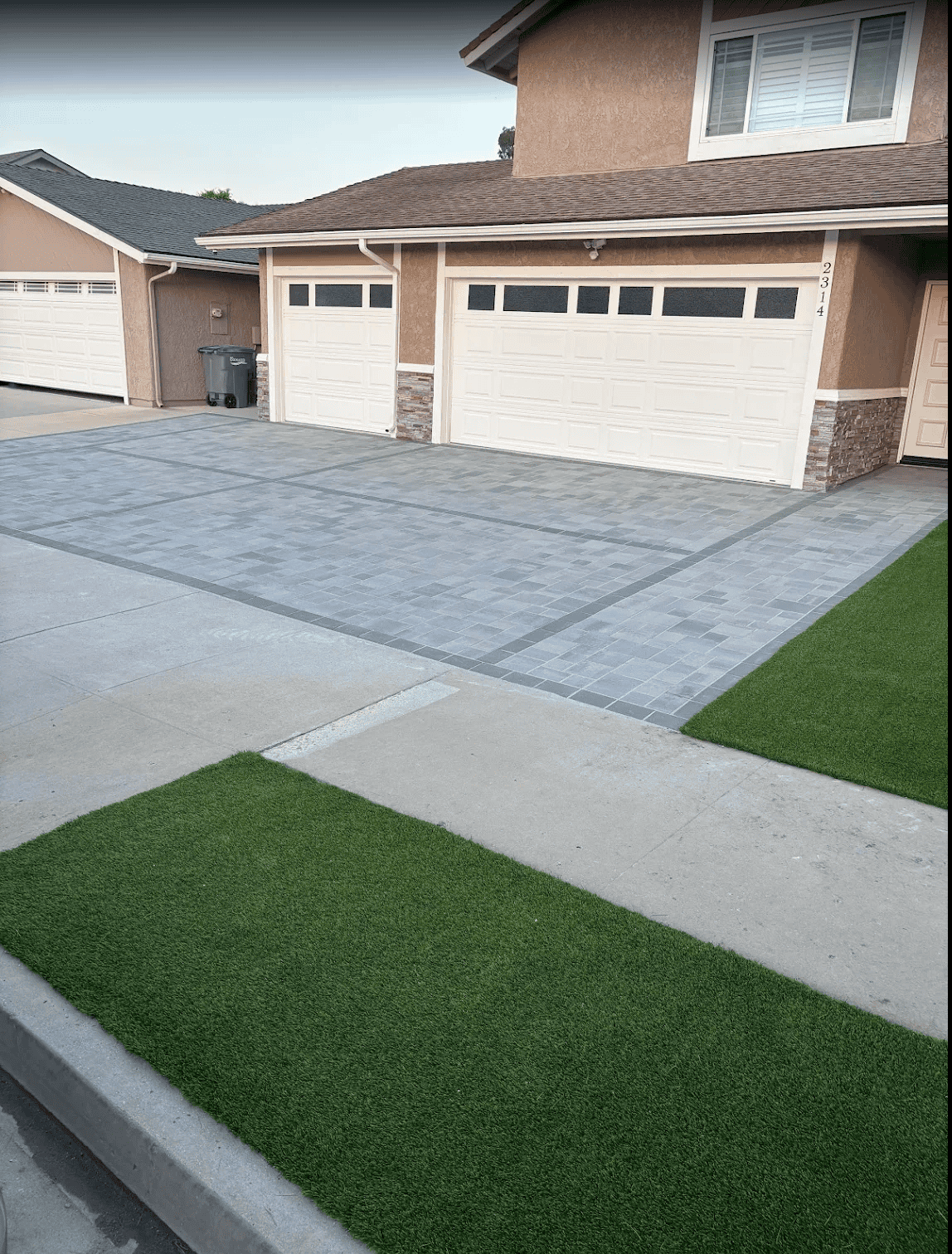 Driveway and front yard, lawn replaced
What homeowners want to know before the lawn comes out
No. We do not install sod because of the water shortage. If you want green, we build it from artificial turf; if you want living plants, we install natives and drought-tolerant species on drip lines instead.
Yes. Turf laid over grass sinks and ripples as the roots break down, and anything left alive pushes through the seams. A proper lawn replacement strips sod and roots, grades the soil, and builds a compacted base first.
Yes. Turf goes where the yard gets seen or used, rock and drip-fed plants on the rest, and living grass only where someone will still use it, with the sprinkler zones split so that grass keeps its water.
Programs exist in California and change often. They run through the water agencies, so the one for a Ventura County address depends on who sends your water bill. Check the current terms before you start; we cannot promise a rebate on any job.
Hotter. Living grass cools itself with water; turf does not. Newer products run cooler than older turf, a rinse drops the surface fast, and a shade tree or sail over the seating area does the rest.
Get a free estimate for taking out the lawn
Send the address and a rough size. We measure, look at the soil and the sprinkler layout, and put the removal and the turf on one written estimate.