Artificial turf installation for Ventura County yards
VC Turf handles artificial turf installation across Ventura County, from the old lawn coming out to the last pass of the broom. High-density turf from four trusted manufacturers, products backed by manufacturer warranties, on a base matched to the soil, with gopher mesh under it.
Made for dry summers, watering rules, and gophers
Artificial turf is a sheet of synthetic grass blades locked into a backing, laid over a compacted rock base, and weighted with infill. It fixes one problem: the front yard is supposed to be green, and the weather here will not allow it. Summers stay dry into October and watering days shrink with every new rule. The lawn browns out anyway.
Gophers tunnel through most neighborhoods in the county. Soil swings from heavy clay to sand that will not hold a grade. A proper install answers all of it: mesh under the base, a base sized for the soil, a surface that needs no sprinkler. Turf is one of the three trades we run; concrete and pavers are on our services page. Google lists VC Turf as a turf supplier.
What separates cheap turf from turf that still looks good in year ten
Turf is sold by face weight, the ounces of yarn in a square yard. Ours runs from 73 oz to 126 oz. Heavier turf has more blade and hides the backing. Pile height is how tall the blades stand. The backing is punched with drain holes. Infill keeps the blades up and the sheet down. Several blade colors over a brown thatch layer make turf read as real grass from the sidewalk. Cheap turf skips all that: flat, shiny, one green, matted in a few seasons.
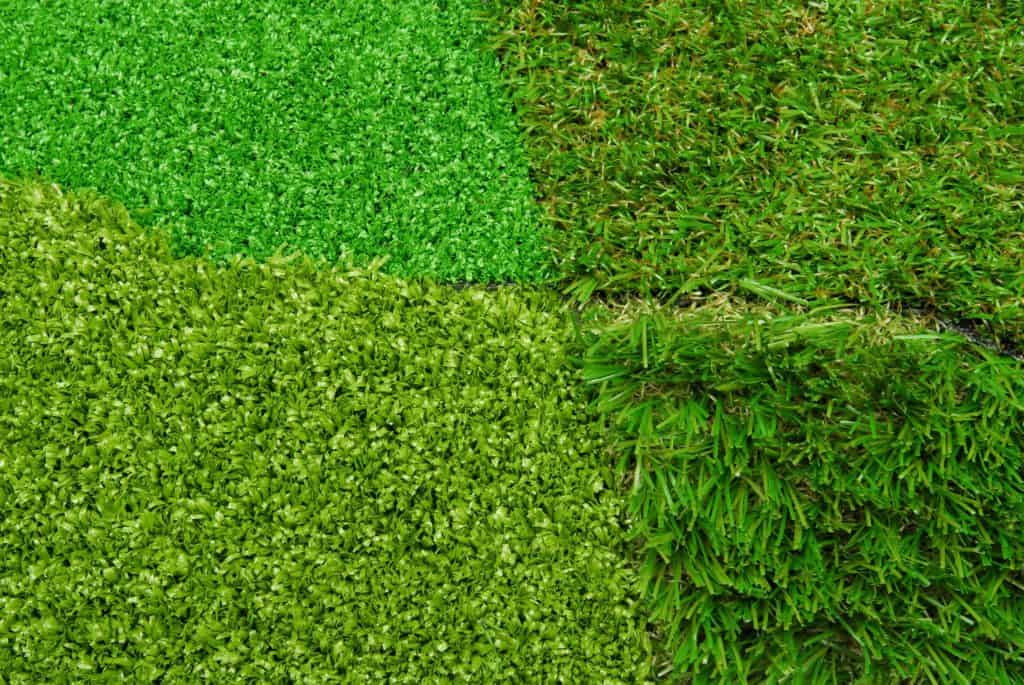 Turf samples
Front-yard turf
The turf the street sees: heavier face weight, multi-tone blades, and a medium pile that stands up on its own.
| Face weight | Heavier end of our range |
|---|---|
| Blade design | Medium pile, several blade colors over a full thatch |
| Best use | Front lawns, entries, and yards on display |
| Our verdict | Reads as real grass from the sidewalk and keeps its shape with little brushing. |
Mid-grade lawn turf
The middle of the range, and the turf most lawns get. It looks real from the street and drains well.
| Face weight | Middle of our range |
|---|---|
| Blade design | Medium pile, two or three greens over a brown thatch |
| Best use | Backyards, side yards, play areas, most dog yards |
| Our verdict | Stands up to kids and dogs. Where we point most homeowners. |
Soft backyard turf
A taller, softer pile made for bare feet, the turf people sit on.
| Face weight | Heavier end of our range |
|---|---|
| Blade design | Tall, soft pile with several blade shapes and colors, full thatch |
| Best use | Party lawns, play zones, anywhere people sit on the grass |
| Our verdict | The softest option we carry. Needs brushing where people walk the same path. |
A turf install is mostly what happens before the turf shows up
The roll of turf is the last thing off the truck. Labor decides how long the job lasts, and most of it goes into the ground.
Demo, haul-off, and grade
Lawn, roots, and sprinkler heads leave on our trucks. We grade so water runs away from the house; low spots get drains now; see drainage and grading. Old concrete comes out as demolition and site prep.
Gopher mesh on the soil
Mesh goes on the graded dirt before any rock. A gopher that tunnels up hits wire and turns around. Skip it and the first mound is a bump you can only fix by opening a seam.
Base and weed barrier
Crushed rock with fines, spread, wet, and compacted hard and flat. Depth changes with the soil. This layer keeps turf from rippling or sinking. Weed barrier goes on top.
Seams, nails, infill, brush
Rolls are laid so every blade leans the same way, seamed, stretched, and nailed at the edges. Infill is brushed in so the blades stand up. A paver border goes in on the same visit.
Pet installs drain differently
A dog yard gets fewer layers under the turf and a fully punched backing, so urine passes through fast and a hose rinses it out.
Which turf page do you need?
Start with how the yard gets used. Finished jobs are in the gallery.
| How the yard gets used | What the install needs | Start with |
|---|---|---|
| A front lawn that stays green | Mid-grade turf, gopher mesh | Lawn removal and turf conversion |
| Kids, parties, bocce | Taller pile that springs back | Backyard turf |
| One or more dogs | Pet-rated turf | Pet turf |
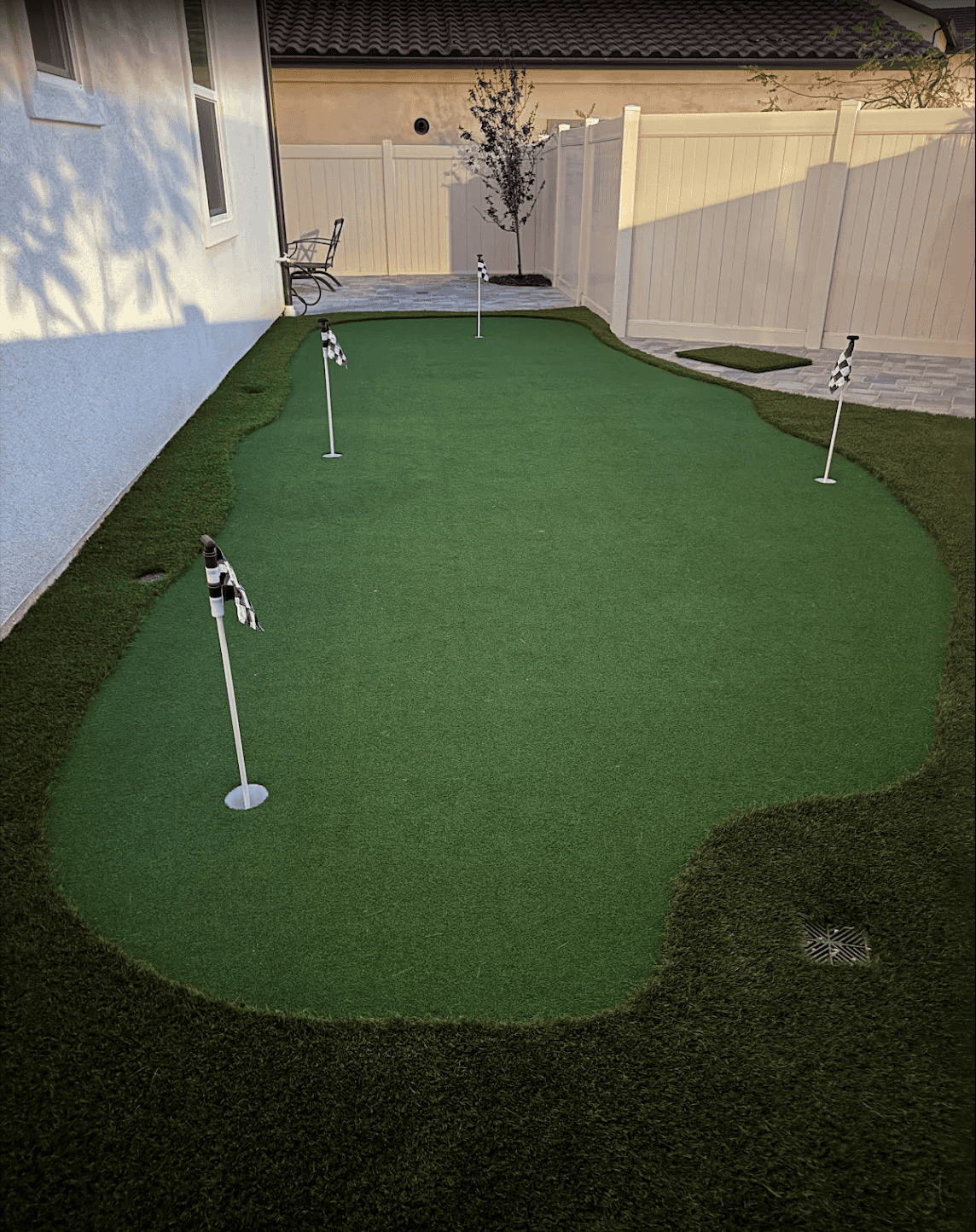
| Chipping and putting at home | Putting-green turf on a level base | Putting greens |
| Common areas, medians, frontage | Heavier turf, phased work | Commercial turf |
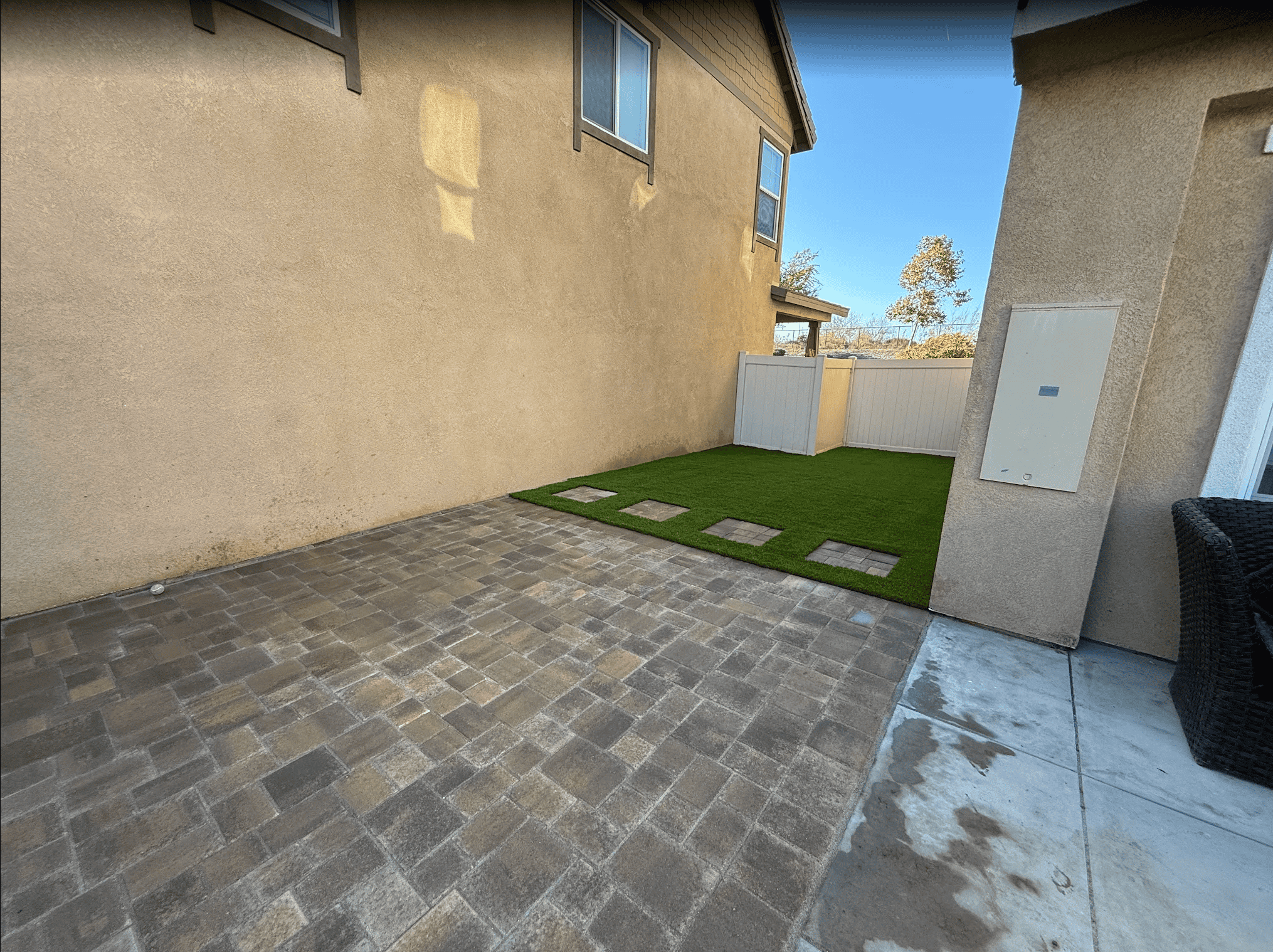 Lawn replacement
Lawn Removal and Turf Conversion
The grass and sprinklers come out and the yard stops needing water. The full case: water, upkeep, trade-offs.
Lawn replacement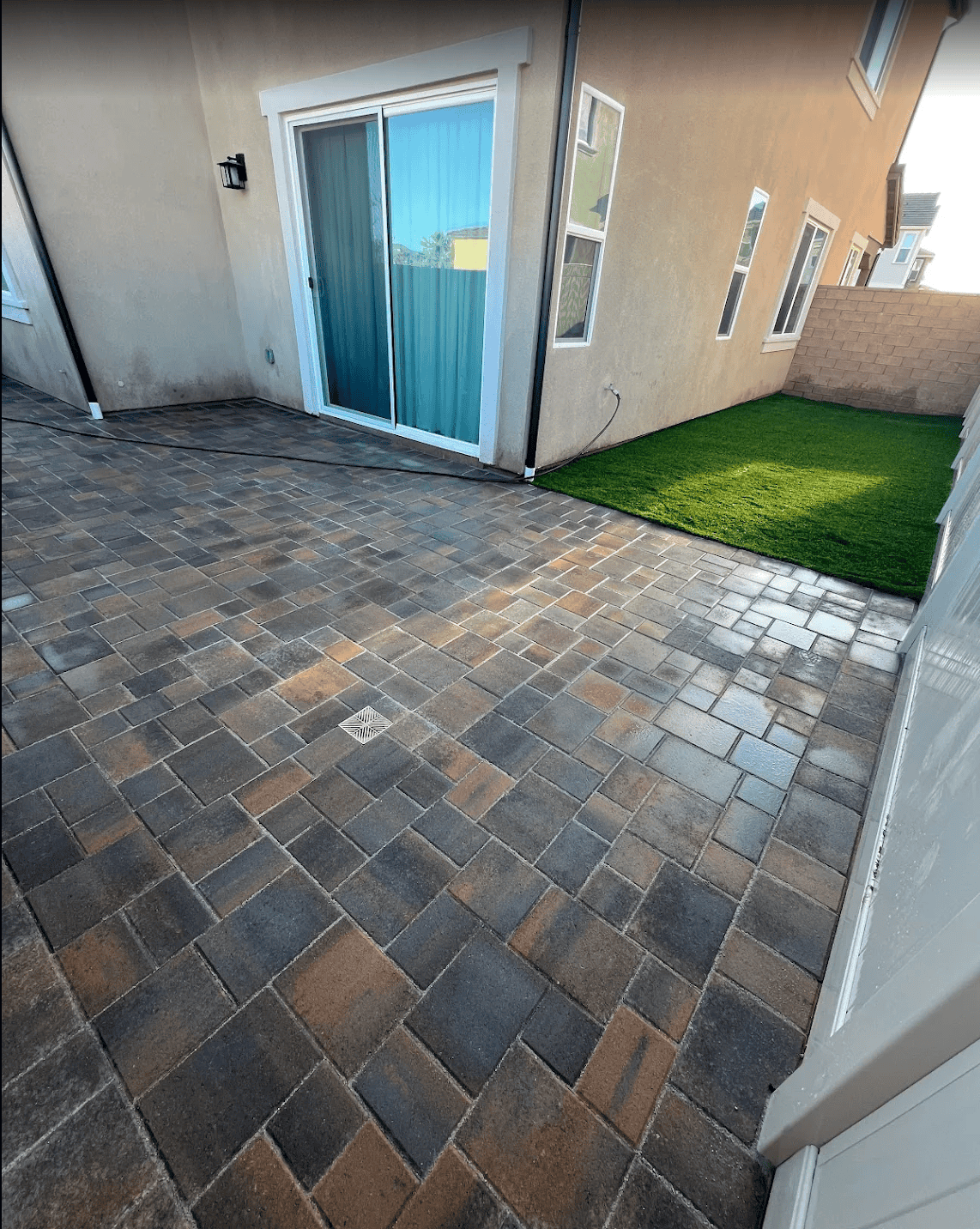
What turf asks of you after the crew leaves
Not much. Rinse off dust. Brush it a few times a year where people walk the same path. Clear leaves before they rot into the infill. No mowing, no fertilizer, no sprinkler timer.
Turf from our manufacturers is designed to last 15 to 20 years. Paths wear before open lawn, so heavier turf goes where people walk. It gets warm in full sun; newer products run cooler than older turf, and a rinse helps.
Water is the reason most people call. A yard with no sprinklers uses no water, and the bill shows it the first summer. The full case is on the lawn removal page.
What moves the estimate is square footage, what has to come out (dirt, dead lawn, or a slab), gate access, soil and base depth, and the turf grade. It all goes on one written estimate.
Questions people ask before they pick a turf
For most front lawns and backyards, turf in the middle of our range is the pick. Heavier turf goes on display yards and busy paths; lighter turf only where nobody walks.
No. Mesh goes over the soil before the base, so a gopher hits wire and turns back.
Infill is the sand or granule spread between the blades after the turf is nailed down. It weighs the sheet, keeps the blades standing, and protects the backing. Every artificial turf installation we do gets it. Skipping it is why cheap installs mat and shift.
Turf costs more than sod on day one. After that it costs nothing to water, mow, or fertilize, for the life of the turf. The cost post above spells out what a bid contains.
Show us the yard. We will bring the turf samples.
Call or request a free estimate. We will measure, check the soil and look for gopher activity, and lay the grades side by side on your lawn. Not sure we reach you? Check the service areas.